Peace Britney Spears. I’d like to thank you for shaving your head.
Essay reading here:
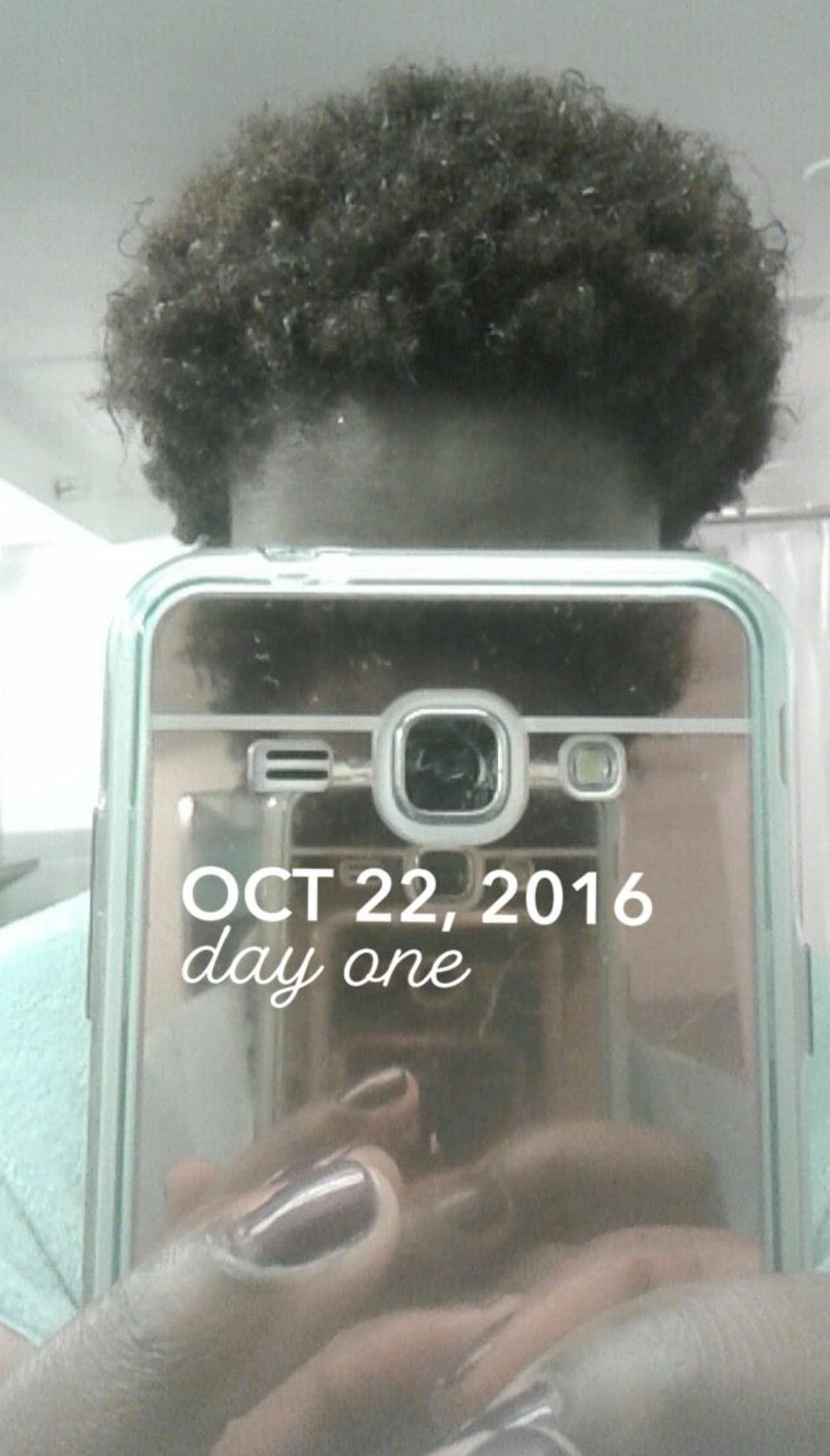
I’m not sure about how you feel about the pictures taken of you in this time because you did not get to post a cute selfie to Instagram to announce your body-snatching. Your photo was taken from you, I would say, in the moments you decided to shave your head. I wouldn’t want to circulate imagery of you being exploited for profit so openly... so instead, here’s a picture of my own hair, the night after I cut it all off with kitchen scissors.
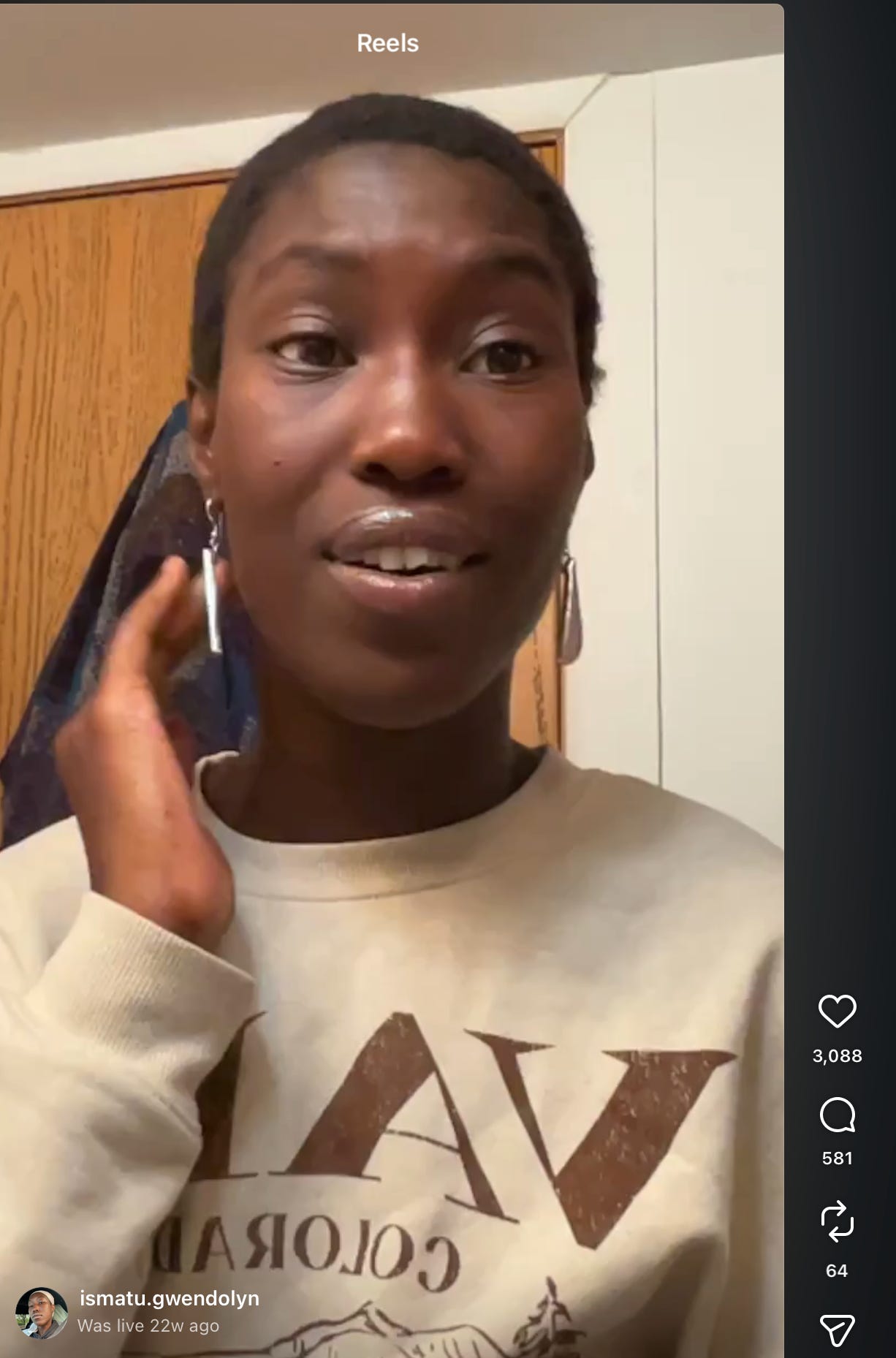
It was November of 2025. I had been detained coming back into the United States, where I am a citizen by birthright. Three major events were taking place:
- National Security Presidential Memorandum 7 had been passed weeks before, permitting the frame of domestic terrorism to justify the targeting of anyone perceived as a dissenter of the Trump Administration’s purported values and the United States as a whole.
- The United States moved Sierra Leonean citizens from the restricted list to the banned list, with the added possibilities of increased “security measures” for anyone who traveled to and from Sierra Leone.
- I had just returned to the United States after pouring a few thousand United States Dollars into Sierra Leone’s local economy, having produced the first industrialized rice harvest for my tribe since the Atlantic slave trade.
I knew about the rapidly changing political climate. I knew it was a very dangerous and foolish decision to come back to the United States. I also knew that I did not care very much. One of my dearest friends was on their deathbed and I could not bring myself to stay in Sierra Leone and not say goodbye to them; I am now more learned about how grief catalyzes me into gunpowder, explosive and lingering. Coming back to the United States when ICE had just been deployed to occupy Chicago led to me contemplating incarceration— once my bank cards turned off, the question was no longer if I was going to be sent (back) to detention, but what kind?
I did already talk about the process of being detained and searched (legally and extra-judiciously), but what I want to include is this semi-permanent state of after. I have come to realize that my previous life as a (semi) private citizen has died along with my loved ones. Similar to what Mahmood Khalil expressed in his recent article for Intelligencer: “That’s the thing I can’t get back: the not-thinking.”
I think now, endlessly.
I think about every camera I come across: every phone attached to a person filming their day, every traffic light, security cam, ATM lens. Every day I leave the house I am recognized as ismatu gwendolyn and I think about the day someone who seems friendly attacks me instead. Every day I think about if anyone around me would intervene if I were taken off the street and thrown into the back of a van. Every day I wonder if I finally feel able to tolerate full-time security, like my patriarchs want for me. Every day I struggle to find familiarity in this life where I never feel the easy assumptions of anonymity again. Of course those people aren’t watching you. Of course those people there aren’t talking about you. Of course no one is looking at you. Or for you. Of course government structures don’t care about you. I cannot convince myself of these once baseline truths anymore because each belief, one by one, has demonstrated themselves false, dead, a thing of the past.
I am a liability to my loved ones such that I’m afraid to go near my friends and family— such that, in some cases, I intentionally attempted to burn bridges because I knew I could not guarantee my safety within and for community. I know it’s only going to get more intense the more I commit building structures which grow longterm sovereignty. I am ahead of myself.
Ms. Spears, I thought of you fondly the night I chopped off my hair. I was seated in front of a mirror at my friend’s house freaking everybody out, eyes bleary and red and stressed with tears, considering how much I cannot hide from the hyper-surveilled, internally militarized nation state while inside of it and I certainly cannot hide my loved ones— and how, even if I capitulate now to a growing and overt authoritarianism, I can never completely go backward… looking over my shoulder in perpetuity. I thought about you because you are someone who has spent years on end wondering about and calculating for every single camera in the room. You too entered into a permanent after.
I thought of you, of course, the night I chopped off all my hair. I smashed my phone and cut my hair and cried until the sun came up.
A brief aside about my hair (and yours), in which we define our terms for the evening:
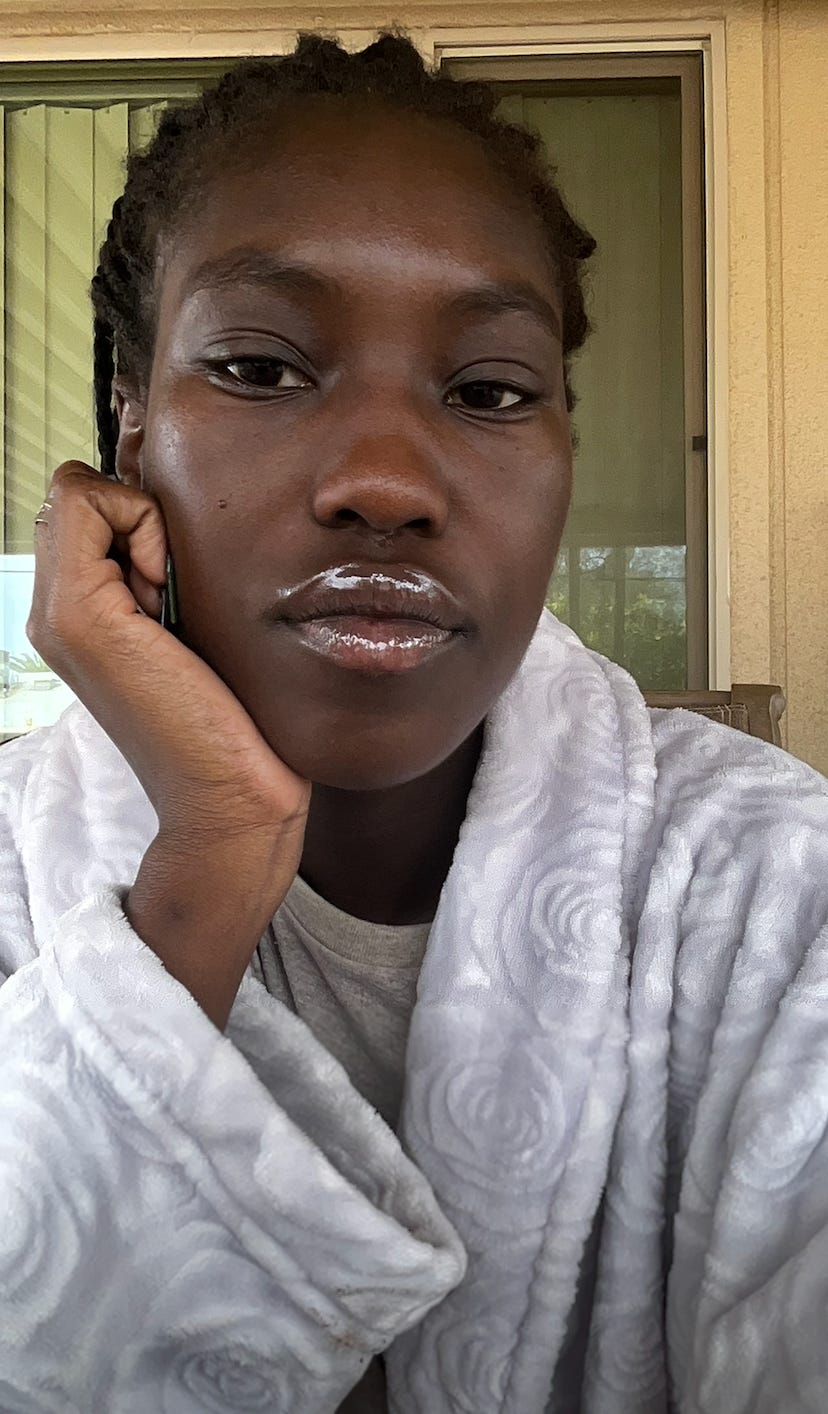
OBJECT(n.)
- Something perceptible by one or more of the senses, especially by vision or touch; a material thing.
- A focus of attention, feeling, thought, or action.
- A limiting factor that must be considered.
- From the artistic disciplines: any tangible thing which exists and can be depicted in a work.
- Can become the focal point of an artistic work (painting, drawing, poem, photograph, etc.), making it the most important element in the composition.
This essay introduces one on the primary frameworks I move through the world with: that of fungibility. I write not just to explain the mundane (that conniving, insistent question, “What happened?”), but to loan you some of my most ardent, most useful, most unpopular lenses on the world: that which sees all things and becomes beings into ingredients, mutable tokens with which we might grow our spheres of control. To do so, I encapsulate the hair and face as our primary object of study, and symbol (or token) of use.
I also want to make clear my primary audience: I am writing to Mrs. Britney Spears with my own readership cc’d on the email. Last time I wrote to you, Mrs. Spears, was in February of 2026, where I told you my immediate circumstances in life and posed some hypothetical questions to my onlooking audience. I received one comment a few months ago that still haunts me at night.

Haunting! Do you know why?
Mrs. Spears, you are NOT a metaphor!
You are not a story. You are not some fable or fairytale character. I did not write then, nor do I write now, to use the “story” of Britney Jean Spears as a “metaphor” to explore my own unfoldings. I write, then and now, to speak to someone who is alive, from someone (me!) who is also alive, sentient, and who also feels a need to remind people I am not a storybook character with some predetermined conclusion. I inherit a world culture from my predecessor (The Britney Spears) who largely does not get to benefit from her own mythmaking. I write because I am certain you, Mrs. Spears, will read (or listen) to this. I write because when I workshopped this essay over the summer while traveling, people genuinely snickered when I brought up your name with serious reverence… all you went through and the general public still struggles to take you seriously. Swear to you I’ll change that or die mad about it. I write because most people either think of you as some forgone conclusion or something gone and dead. People talk about you as if you are a fictional character or dead already!
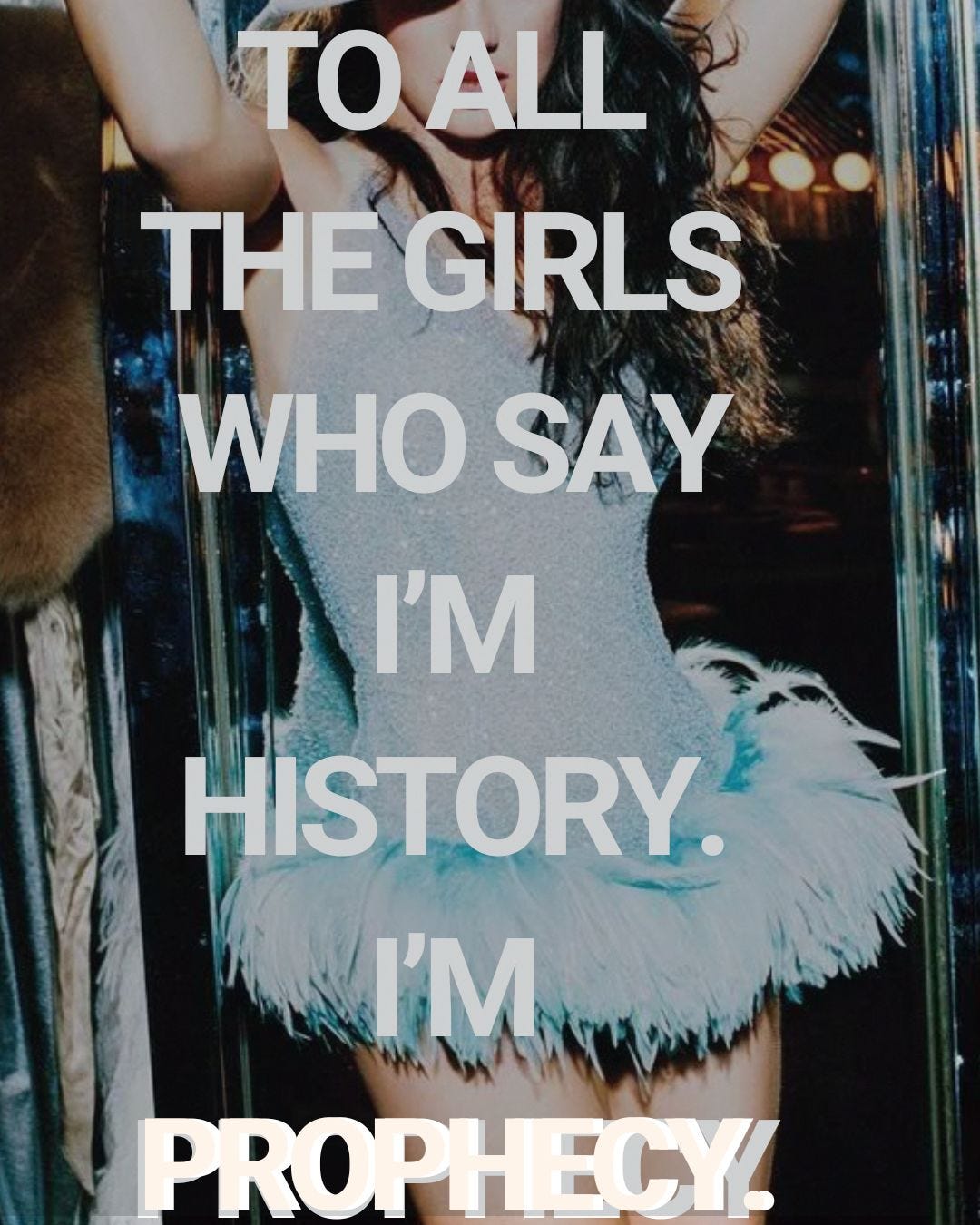
Mrs. Spears, I read your book, The Woman In Me, straight through on a night in February of 2026. I found it haunting in the most comforting way. A universalizing horror occurs when your ontology, your very literal and metaphysical state of being, becomes warped into a machine whose output primarily benefits somebody else.
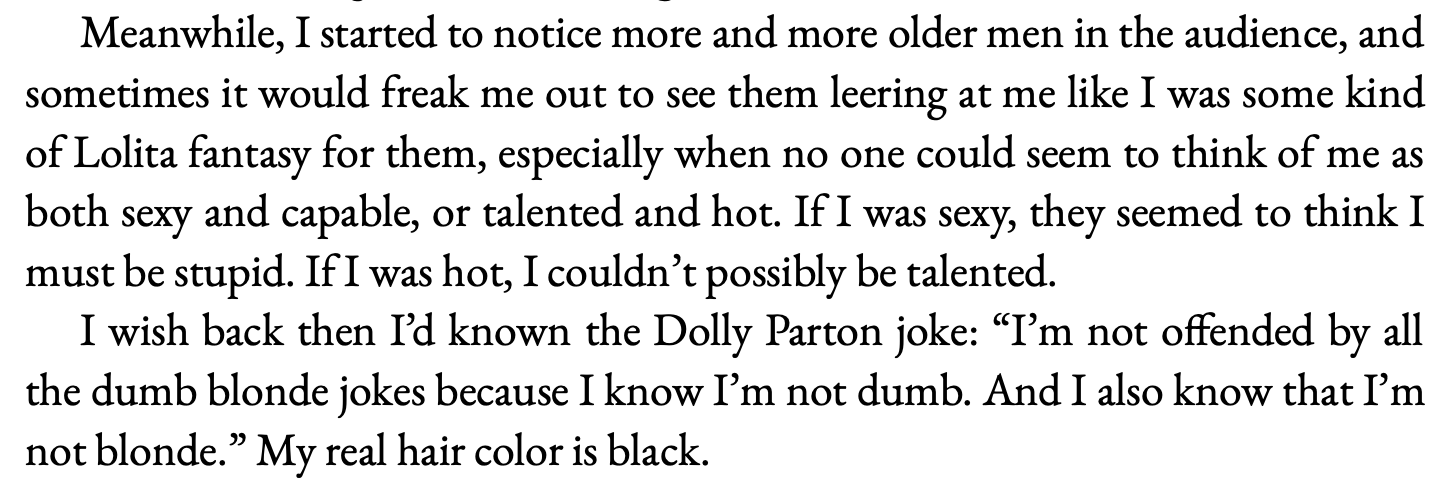
In your text, you spoke about your hair— how attached people were to its blondeness (even though your natural hair color is black), and how that long, blonde hair acted as a canvas that people projected all kind of things onto: innocence, youth, naiveté, stupidity, sex (arguably, everything but agency and sovereignty of self).
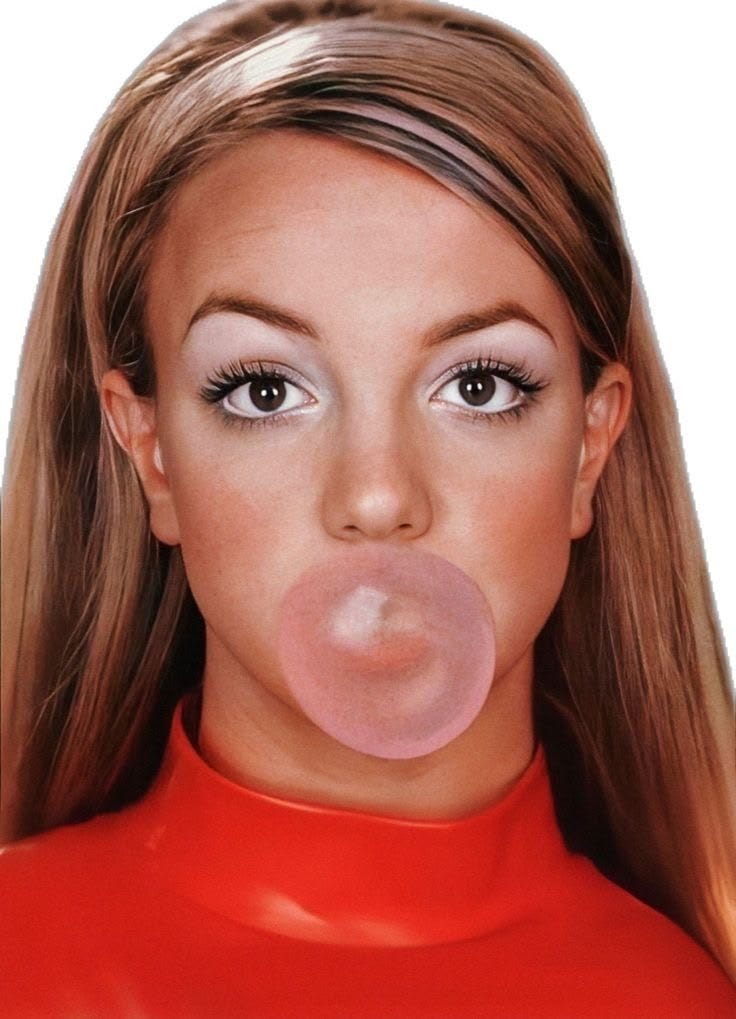
You make these beautiful through lines with your hair throughout your assertions of the life you’ve lived. I note one below, where you notate how much your hair attracted narratives about your personhood onto you that you could not shake off.
The cultural myths we have around hair are particularly powerful— especially as hair itself can represent woman or girlhood, capability, piety, ownership, class, godliness, sex and sensuality and fertility.
CULTURAL MYTH (n.)
- A relevant and recurrent story or archetype within shared cultural experiences that reflects fundamental aspects of humanity, divinity and/or the human spirit back to its proliferators
- wherein culture can be defined as the arts, beliefs, customs, institutions, and other products of human work and thought considered as a unit, especially with regard to a particular time or social group
- and myth can be defined as a traditional, typically ancient stor[ies] dealing with supernatural beings, ancestors, or heroes that serves as a fundamental type in the worldview of a people, as by explaining aspects of the natural world or delineating the psychology, customs, or ideals of society.
Simpler, and self-defined: cultural myths are the stories we tell ourselves that both reinforce and recreate the culture we create, participate and receive around us.
Because I cover my hair, people ascribe sainthood, benevolence, and religiosity to me in a way I cannot control, no matter how m any times I attempt to correct these assumptions. I began covering my hair for entirely practical reasons: I danced for years and only felt truly naked the one day I went to work with my natural hair out.
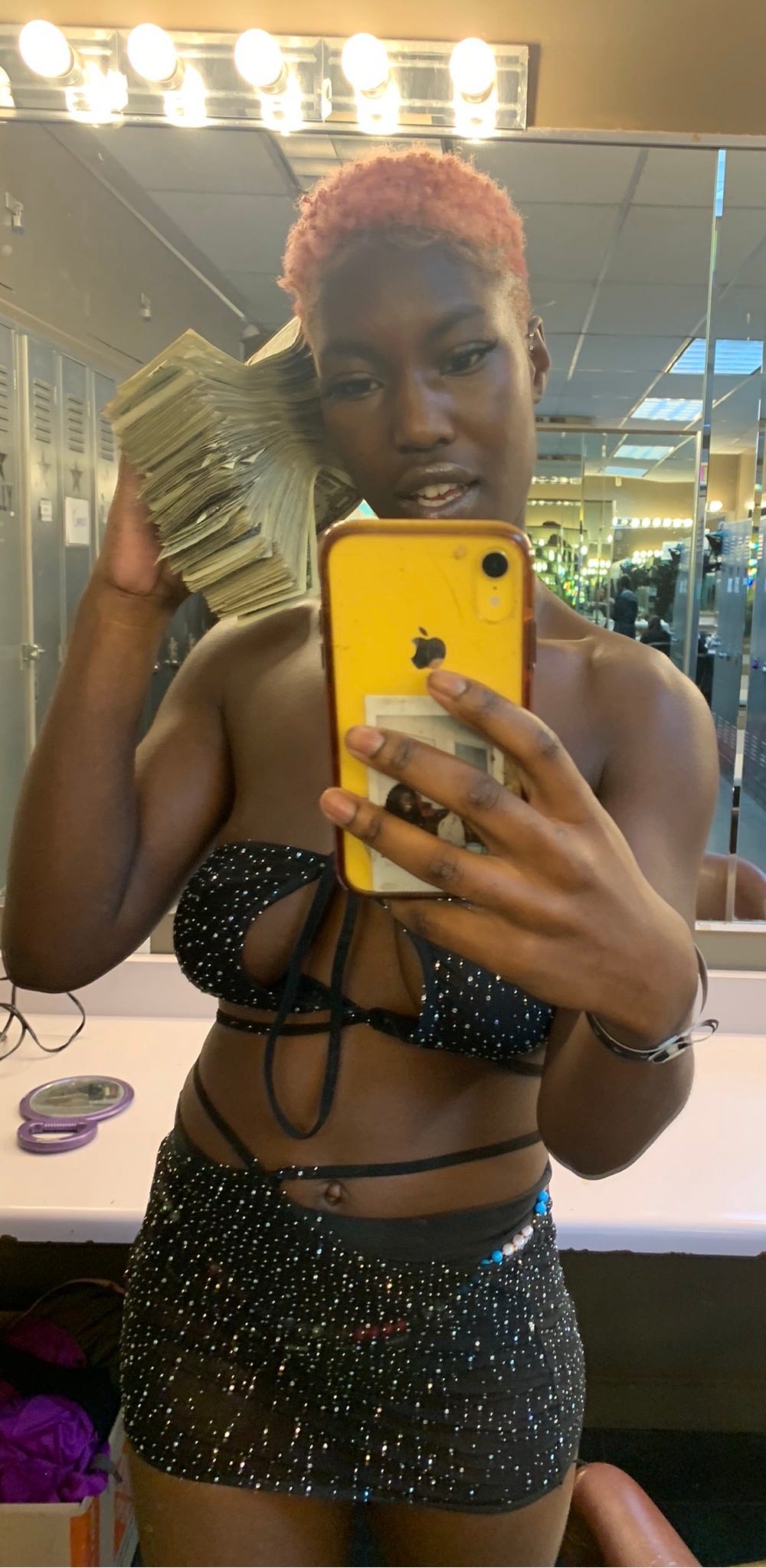
Blanketed hair became a necessary piece for the performance the job entailed. They protected my hair and scalp from being touched (by men and by money). I felt cleaner, not sexier, with wigs on. Physical dollar bills (and the fingers that count them) have seen a lot of life that does not need to touch my crown!
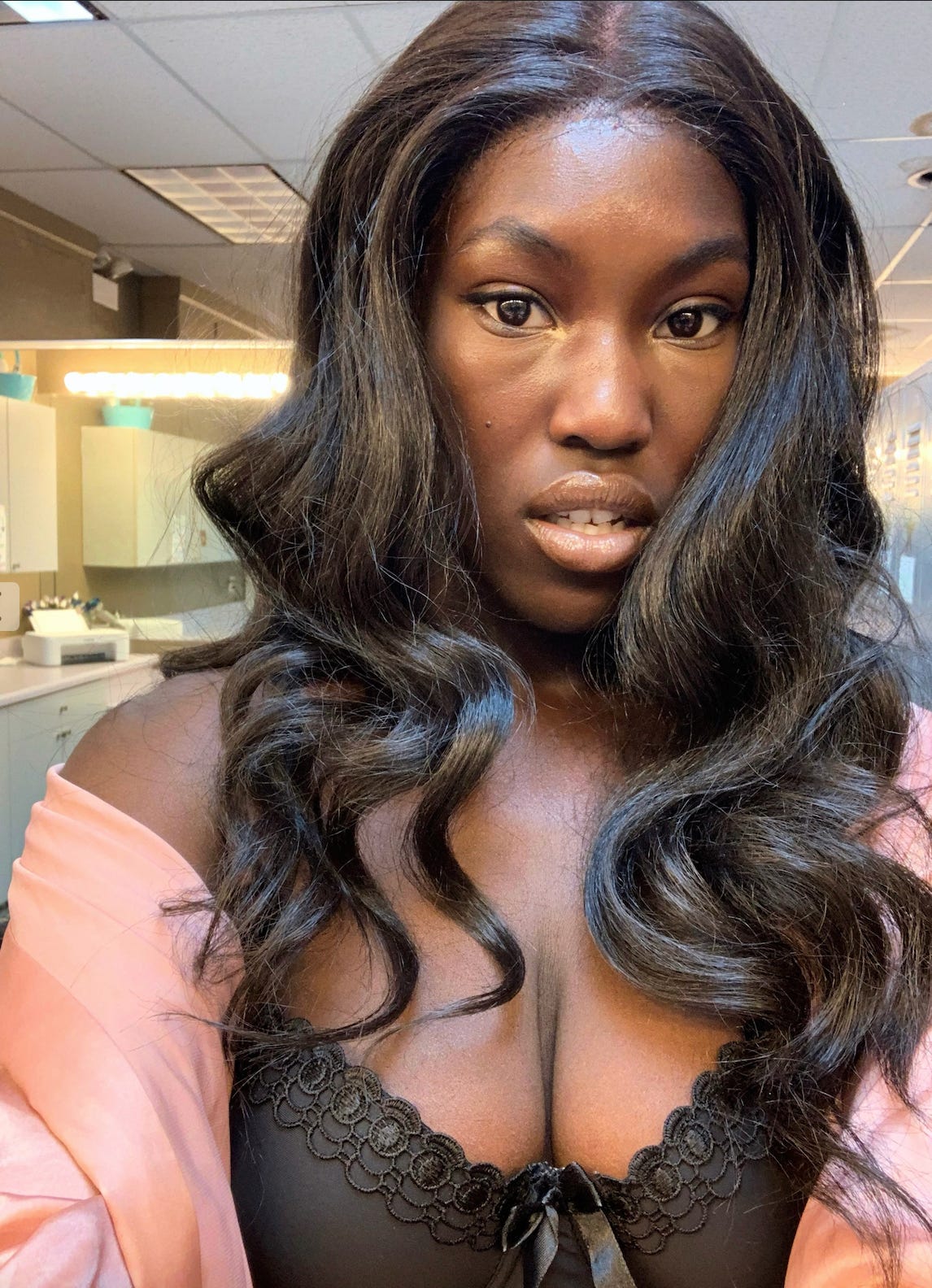
Wigs, however, have always felt hot, tangly, and cumbersome to me. After a few years I began to cover my head with fabric. Of all the sets of political and personal assumptions people made about me from the way I wore my hair, I found the set of assumptions that came with covering it with fabric to the most tenable.
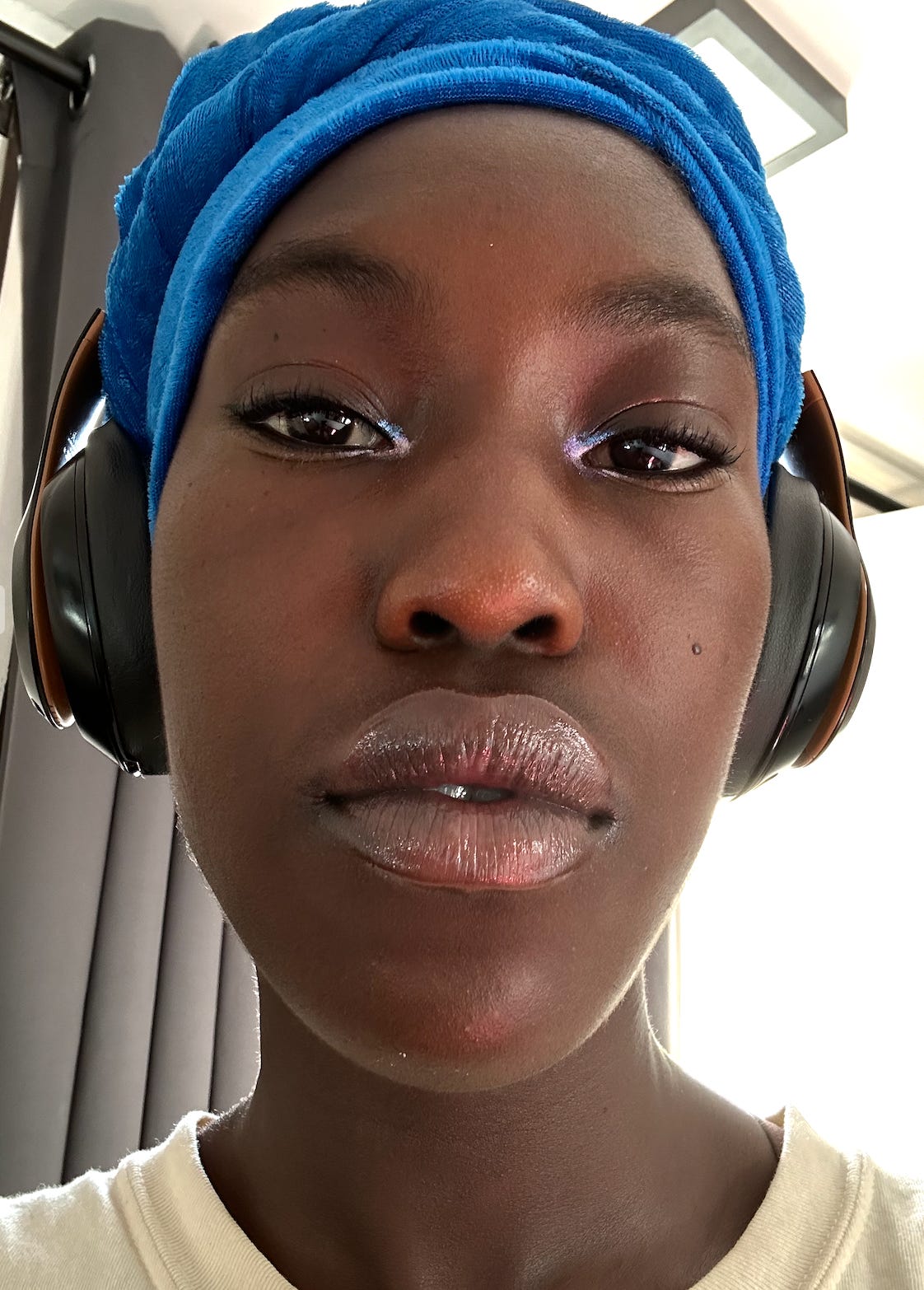
While the logical progression prioritized ease, comfort, and sanitary conditions, the nature of my alleged piousness has, with the dawning of beautiful fabrics, thusly embedded itself in the centerpiece of my artistic practice: my face.
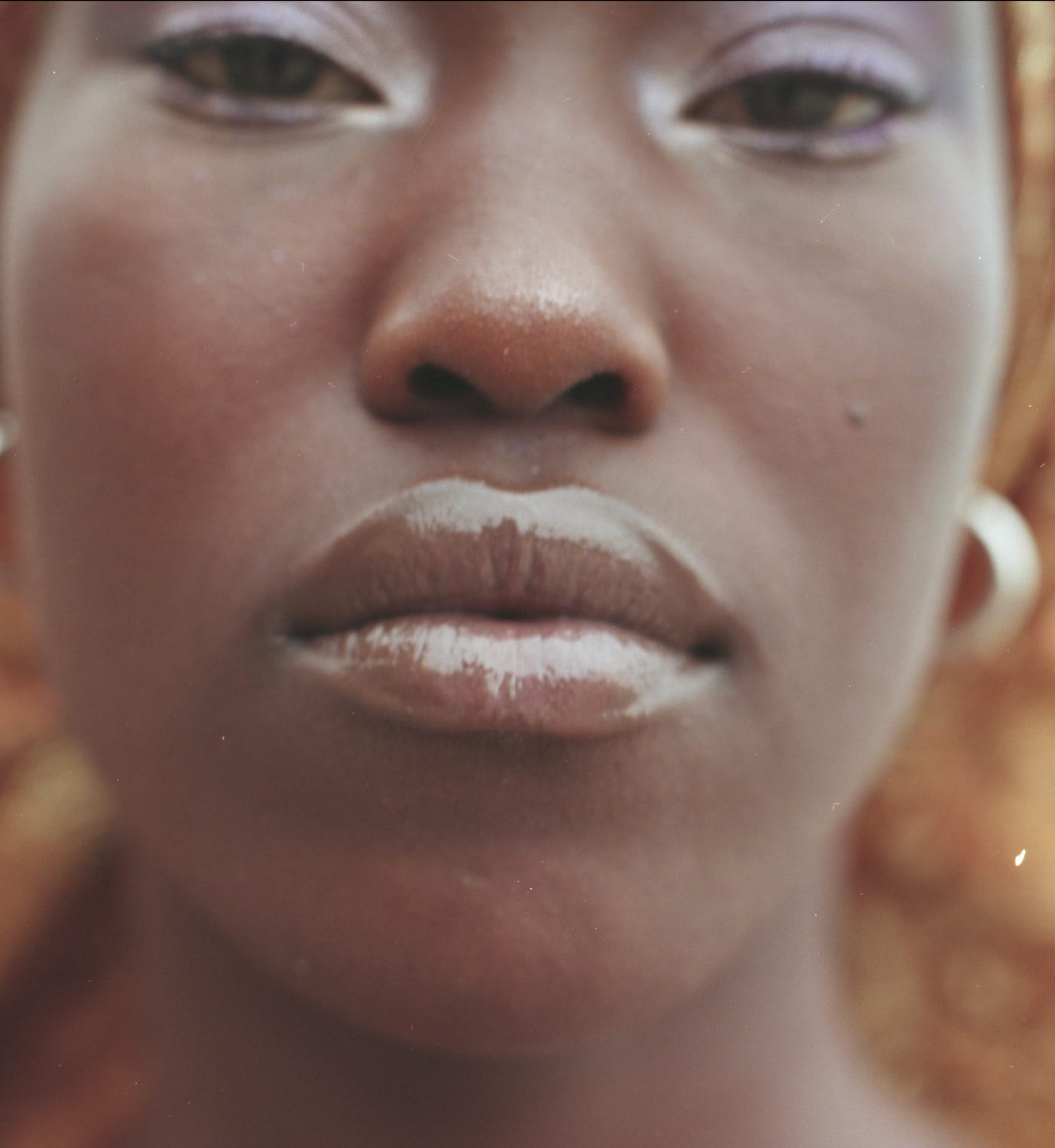
Symbol (n.)
- Something that represents something else by association, resemblance, or convention, especially a material object used to represent something invisible.
- An instance that typifies a broader pattern or situation. [symbolic of]
I’ve written previously about the iconography necessary in symbol-making, stating in bold letters, “Media does not humanize these people flashing on our screens. It makes them icons.” I argued then (and now) that icon and human are different poles along the same spectrum, measuring the presence of smallness (and thus, our ability to feel a person). Where the nameless, faceless human who anonymously moves through their regular life may not inspire masses, their preciousness remains, safe and exalted, in how distinct their love becomes… the bliss of remaining only as far as you extend, mattering only to those you can see.
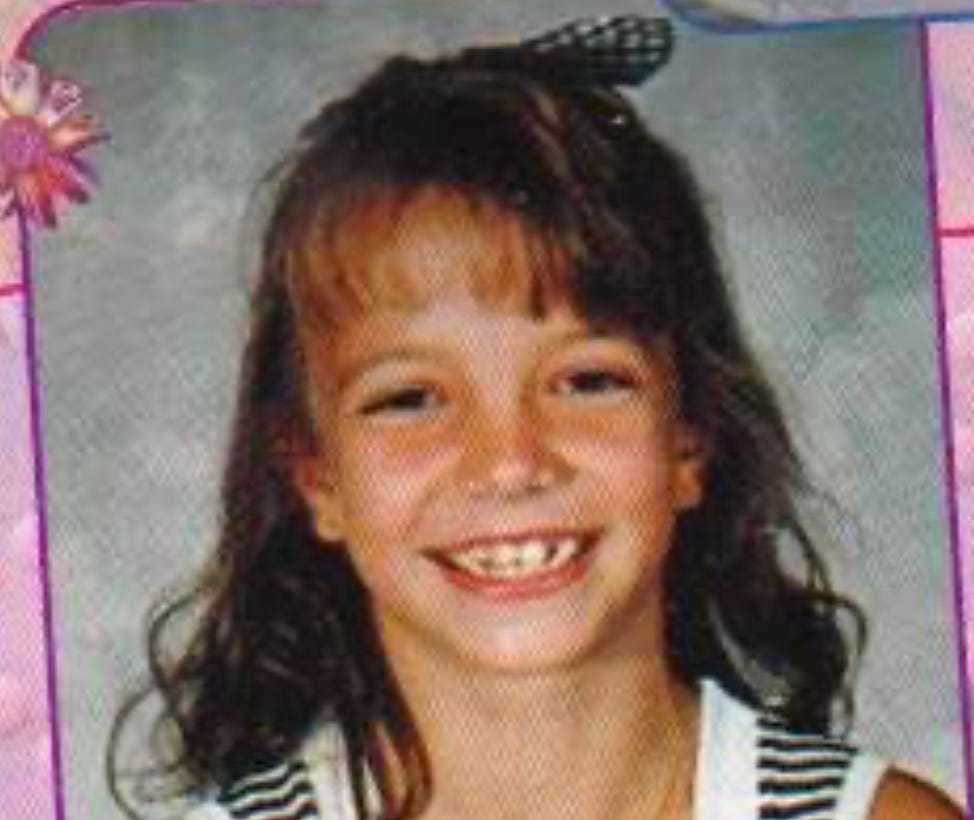
The other side of the continuum births the icon, a canvas with the mosaic spirits of the many, she who becomes revered, viral, a star in our ether, far beyond the personal and finite nature of the anonymous parent, the one in a dozen cousin, your sister, your homie… yet too becomes unlovable in this form from a person-to-person scale. How do you love a saint, a martyr, a superhero, a whore? An icon?
Aren’t they too far away?
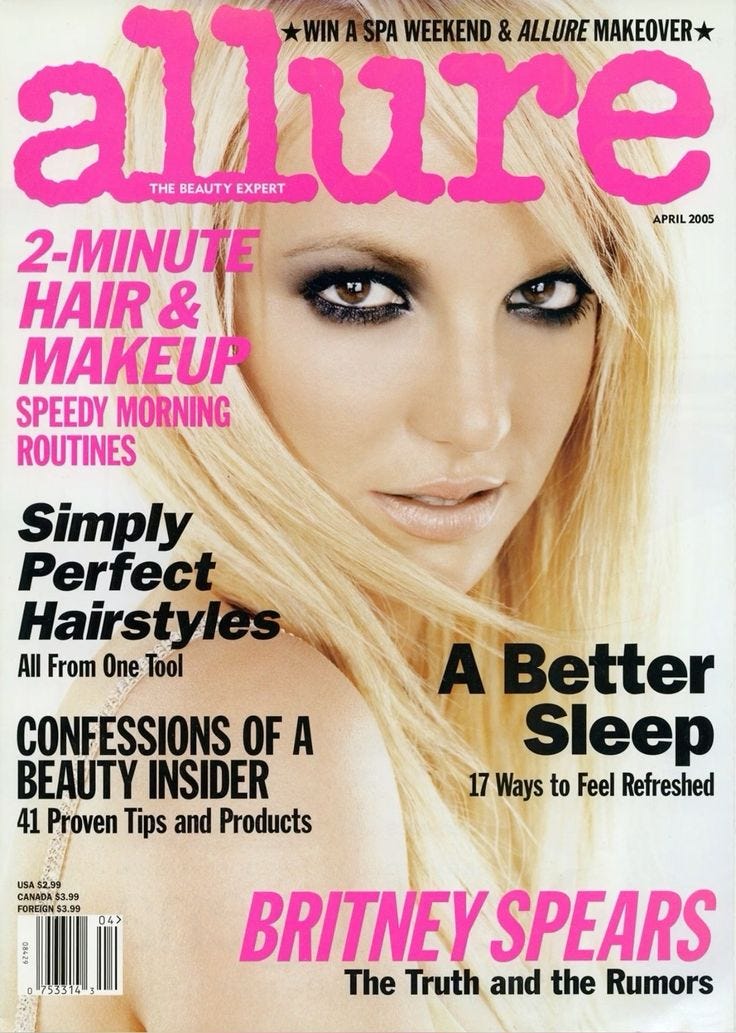
Unimaginable, not because they have become less human, but because they house the hopes and dreams and scorns of so many that we forget ourselves in them. The stars which hang above us that receive our cast wishes… do we also think of who puts the cosmos to bed at night? Or are they too vast?
The difference between the familiarity and recognition of this person:

and this person:

and this thing existing.
My interest in writing to you, Mrs. Spears, has to do with how powerful the cultural narratives you created that I benefit from. Sincerely, from the depths of me: thank you for shaving your head.

I don’t know that you ever had the opportunity to study Blackness and radical world-making, but thank God I did. Way back in the tail end my undergraduate career, these readings found me and have kept me fine company. As I too become a symbol, a walking mosaic of ideas more than an individual person, I’d like to discuss the condition and lens of fungibility as a fundamental aspect of the modern Anthropocene. I argue that no one really gets to choose what happens to you when you don’t own your own image, body, or timespace anymore, that some of us have never had the opportunity for “ownership” at all, and the only power one really has in their toolkit for hijacking their own existence lies in transformation: from the marketable, pleasing, and acceptable into the realm of the insane, the undesirable, and the incomprehensible… and then onwards, to flight.
What is fungible?
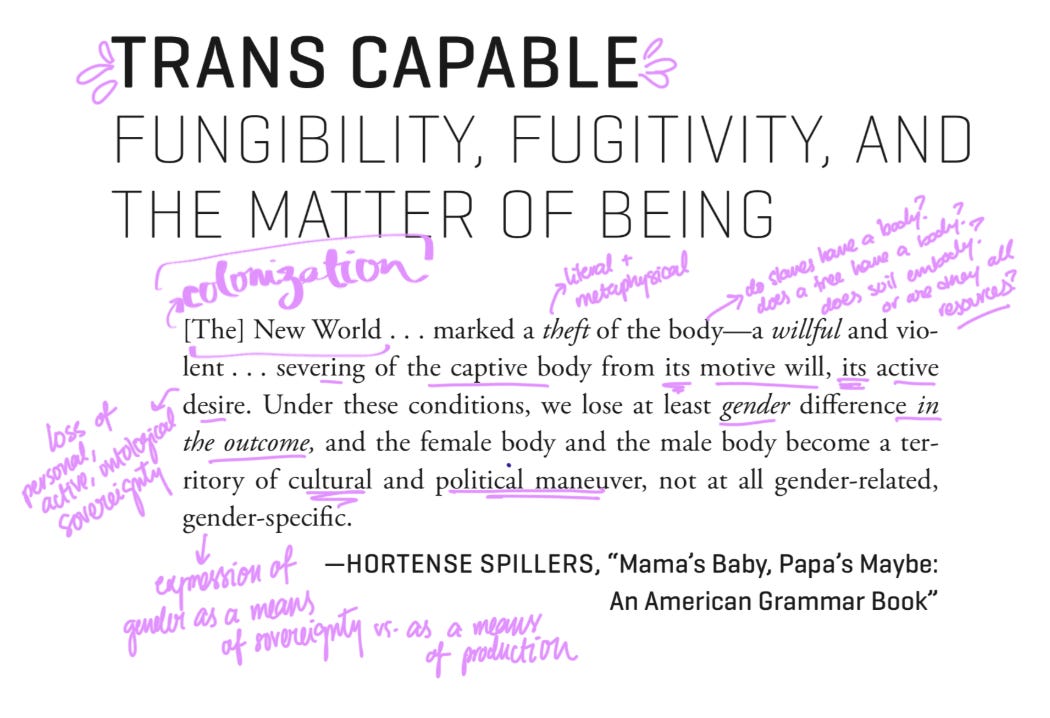
Hortense “Put Some Respect On My Name” Spillers (literary critic, black feminist theorist, Black woman from Memphis, Tennessee) wrote the essay “Mama’s Baby, Papa’s Maybe: An American Grammar Book” in 1987 and became the well water from which afropessimists boil our afternoon tea. As a response to the incredibly racist Moynihan Report— a presidential hit piece on Black lives and culture from the 1965 Lyndon B. Johnson Administration, one that I was required to study in my educational career as a training therapist— Spillers details that the issues with the “Black Family” lie not in the supposed failures, overachievements, and denigrations of the Black woman, nor in the emasculation of the Black man, but in the set up of the economic system which dissolved and recreated the gender roles of Black peoples to suit the new world order.
I don’t wish to deviate too much from the thesis of this essay, however making any point without time dedicated to situate the claim in our shared historical and material context proves little but my own flaccid opinion. I also don’t wish to assume you, Mrs. Spears, share a brain with me, so I begin by stating what feels obvious: Racial capitalism as an economic system requires the absolute subjugation of the body, mind, spirit and soul for anyone in the slave class. Of course, one could argue that we have not had slavery in the United States since abolition in 1833 (one would be lying). I would argue for more literal truth: the machine of racial capitalism requires flesh, by design. Racial capitalism is a death machine.
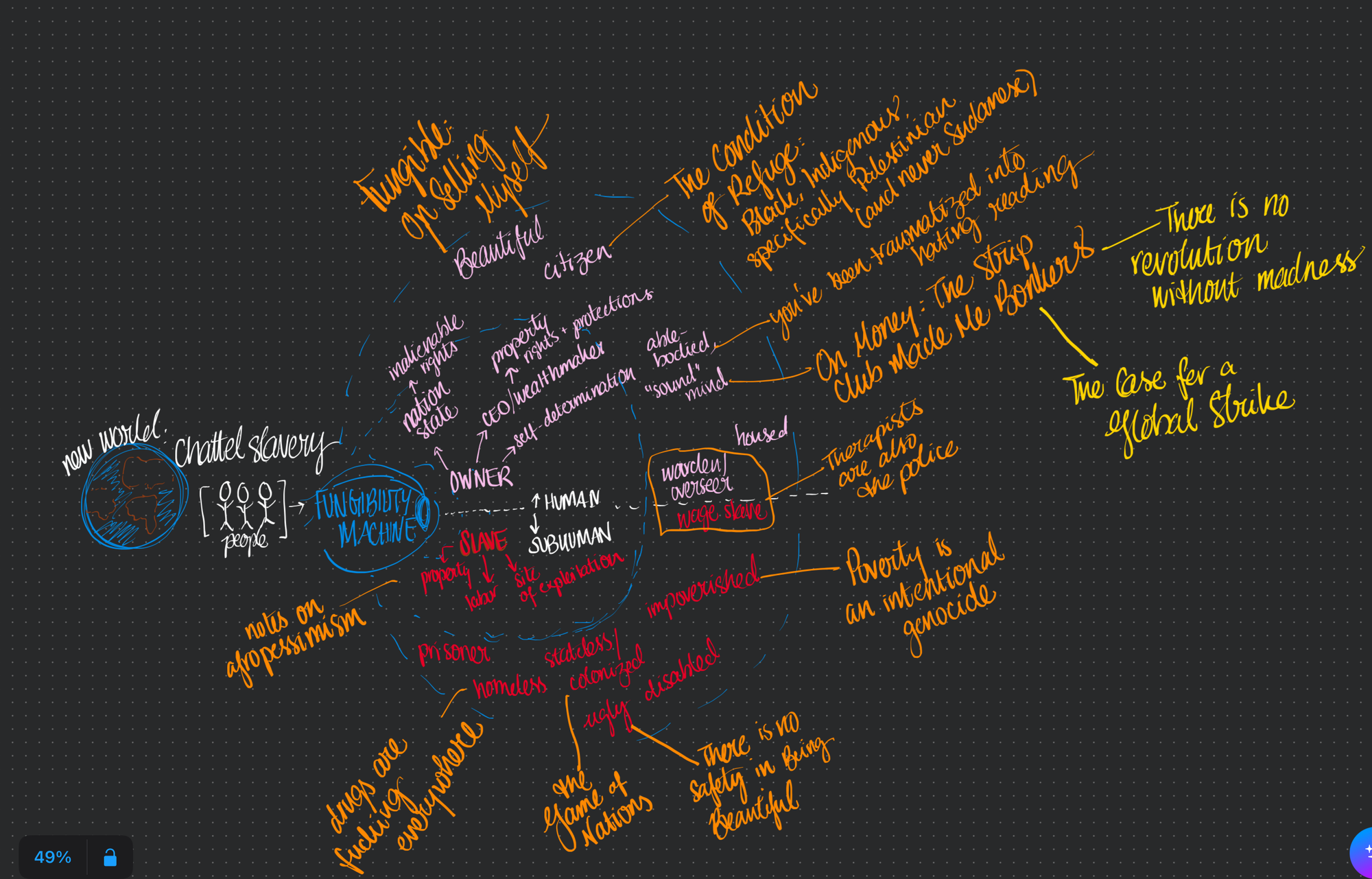
Here’s a diagram where we can see the hallmarks of slavery as it aided in establishing the world order and its ripple effects, touching today:
While chattel slavery (creates kind of slavery that created a class of slaves tied to a people group defined by phenotype) —> chattel slavery creates the basis for race, —>race defines who or what is human with unalienable rights and who or what is un/subHuman.
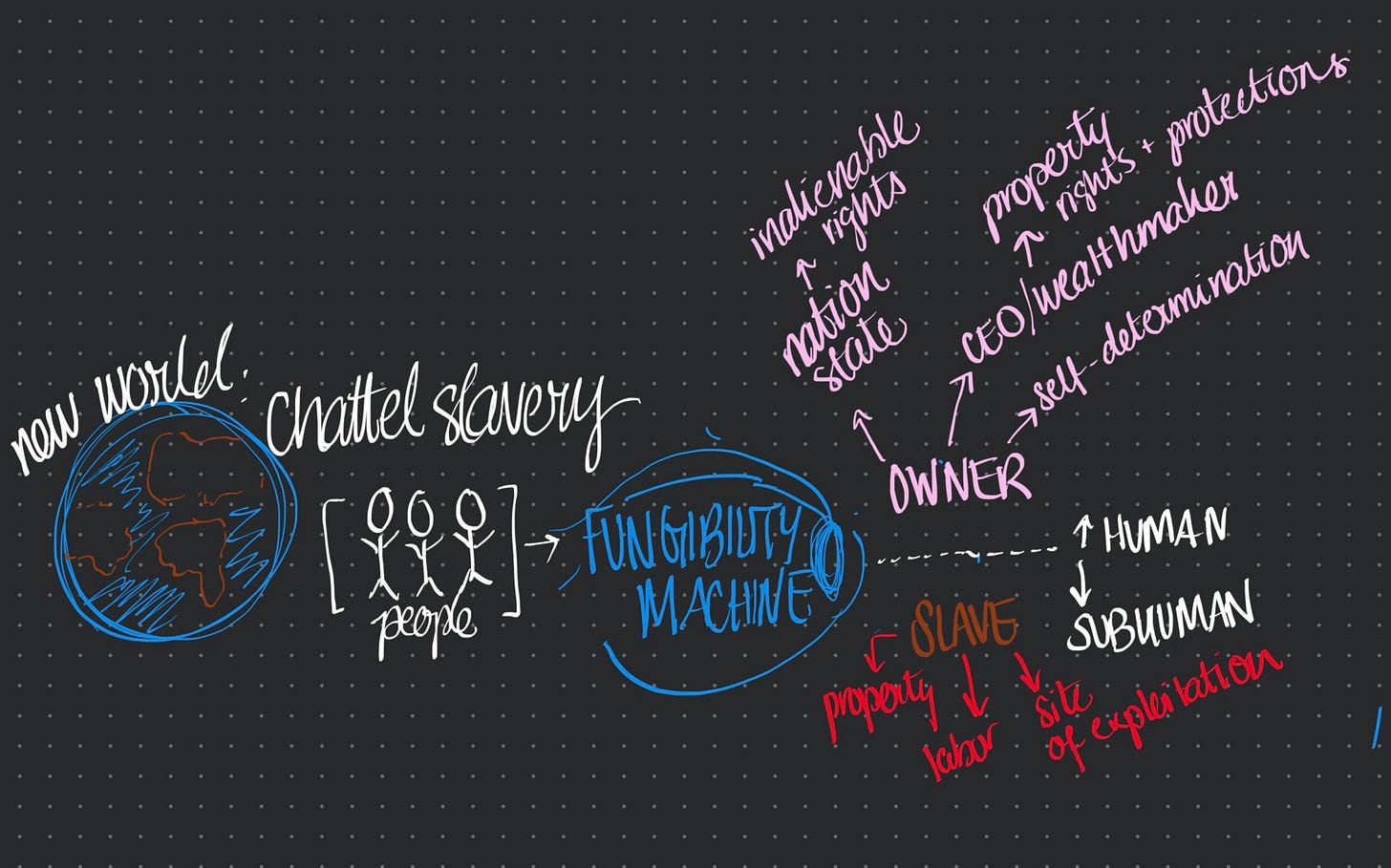
this ripple effect goes to prisoners, prison and policing (Human wardens, unHuman populace), the wage slave (human by purchase, un/humaned in homelessness), the refugee (Human with rights by way of nation state, unHuman without a state for protection —> one way ticket to the poverty class designed to make raw materials), (by adjacent to the building block of rights nature, the structurally ugly, the structurally beautiful further categorized into the owners of their image and those that do not)/
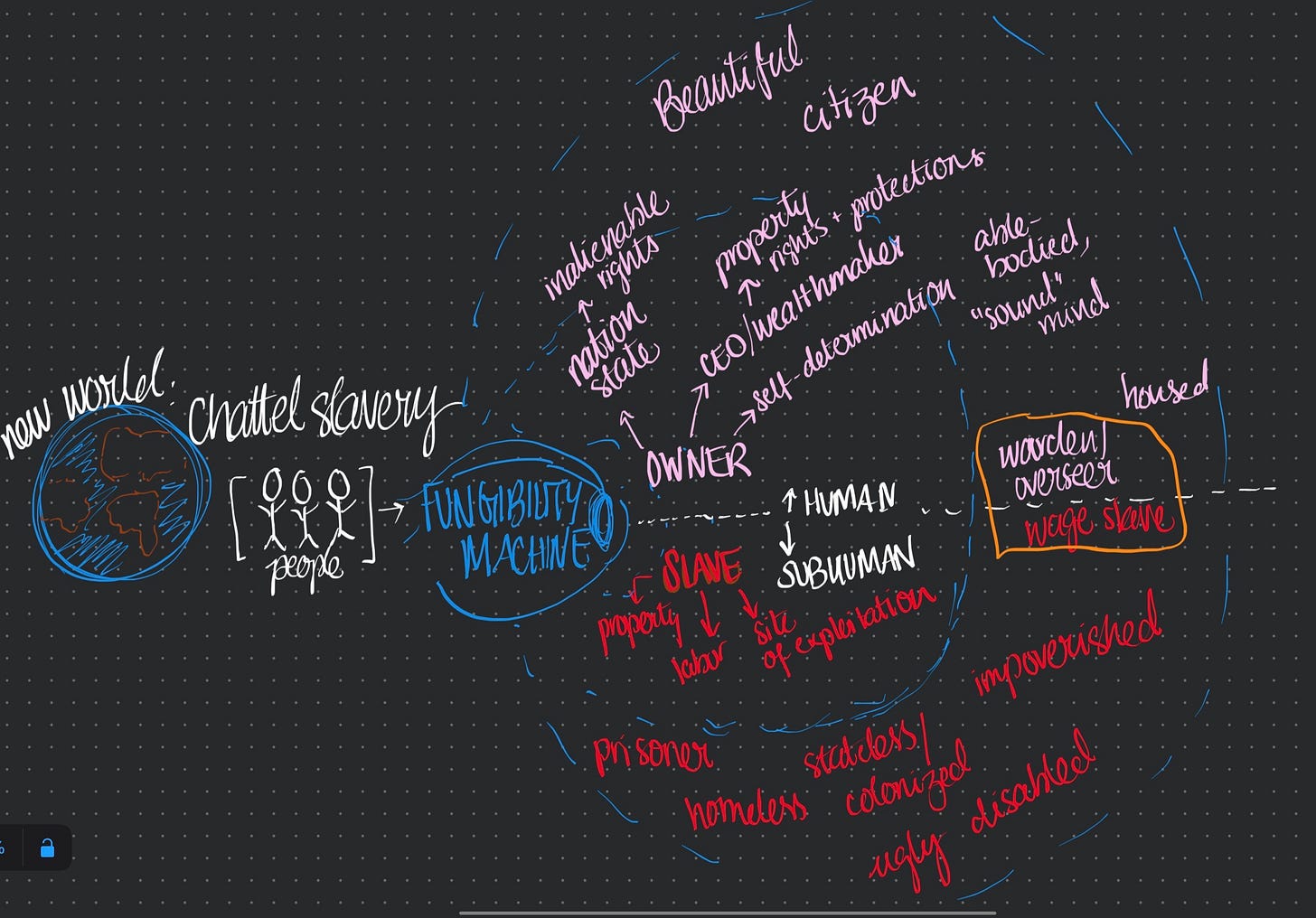
Capitalism designates some people as human, and thus, sovereign to make and shape the world around them, and other people as the raw materials with which the worldmaster can use for their benefit. You talk about the process of being made into the primary ingredient for the Britney Spears Machine under your conservatorship. Thirteen years of indentured servitude in your own life. Those of us in the raw material category— that is what we refer to as fungible.
The legacy of chattel slavery, where tearing of their flesh, the morphing of the human body into an endless site of production, reproduction, and misery made the sanctity of gender and its performances irrelevant (Spillers, 1987). The essentials of “Mama’s Baby, Papa’s Maybe: An American Grammar Book” come down to that thesis statement, annotated the above from C. Riley Snorton’s Black on Both Sides: A Racial History of Trans Identity. This quotation introduces chapter two, in which Snorton focuses on Hortense Spiller’s notions of ungendering to describe how those under enslavement had their ontological determinations stripped from them— or, their ways of being were no longer under their control.
Quickly, because ungendering could be and has been someone’s dissertation: instead of gender acting as a reflection of societal roles and customs which one voluntarily wears and performs, the ungendering process necessitated by chattel slavery made female-sexed flesh indistinct from their biologically male counterparts in any way gender is performed. Gender, which once served as expressions of self and grouphood within specific sociological contexts, now served white supremacist cultural and state functions— meaning, the only important difference between male and female slaves was about production of more people to be brought up and sold as commodities. Any other performance or participation outside of the production of human goods would then be rendered, simply, superfluous to the necessities of capital.
Before we begin analysis, I want to pause here to note the relevancy to you, Mrs. Spears. You might be thinking, girl okay… you know I’m not Black, right?
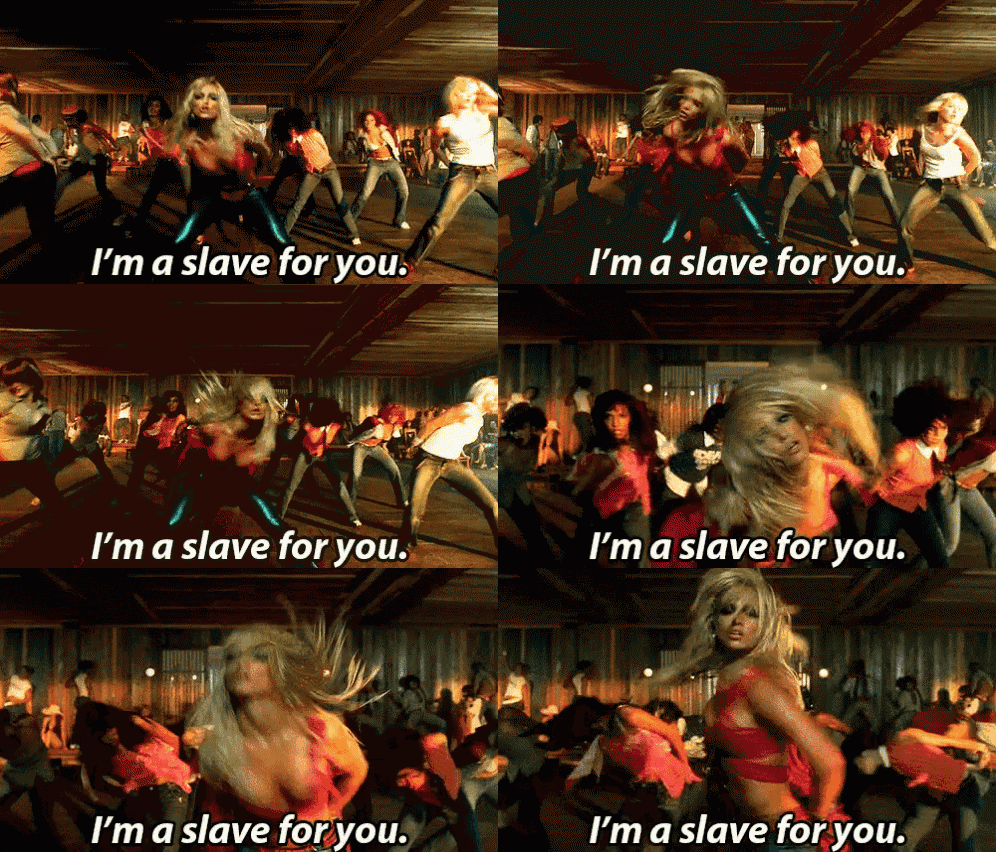
Mrs. Spears, you and I inherited a world order defined and ran by racial capitalism. Commoditization: the process in which once sovereign people become sources of goods and services via labor extraction and the sale of that labor creates the global preset for most human interaction. Racial capitalism set forth the economic model where private entities own the means of production and distribution of compulsory labor— you were locked into compulsory labor within your own life for twelve years. Racial capitalism also set the floor for economic production to that of slavery. The floor for production was, is, and remains how much one can produce under conditions where you would be tortured or killed for stopping, until one works oneself to death or buys themself out of slavery. You wrote that you were locked in psychiatric incarceration for months, drugged against your will for months on end because you said you didn’t want to do a certain dance move, citing it as too hard. Because your family found vitamins in your purse (detailed at the end of chapter 41 of your book, but to your account, you were forcibly sent to rehab more than once for this “offense”). Blackness or not, you have experienced the bitter reality of being a fungible token in your own life, a means of getting everyone else rich on your face, voice, image, and body. Many people reading have experienced this too, in some way or another.
Under mass commoditization, we don’t work for a living; we work for the chance to continue living. Tying our existence to wage, money, and production of profit, can feel inevitable in ways that do not need to be true. The Anthropocene (or, the human-made world) weaves itself together upon sets of patterns and choices we engrain, justify, repeat, disrupt, undo…etc. Whatever our choices, we do choose. Nothing is inevitable.
Mrs. Spears, there’s this phenomenal book of speculative fiction called, Everything for Everyone: An Oral History of the New York Commune [2052-2072], written by M.E. O’Brien and Eman Abdelhadi. The authors write fictive ethnographic interviews that examine the rise of the commune after the fall of capitalism and the nation-state apparatus occurs globally. The last interviewee, called Alkasi Sanchez, casually references the commodity form to reference this era of human existence: “the making of things to sell on the market.” Even though the book is speculative, I want to include this morsel from an imagined world where the commodity form died off, to such an extreme that it became difficult for younger folks to imagine.
“I think it’s difficult to overstate how much [the commodity form] shaped what it means to be human, and how much is changing as we are free of it. People think the real problem was the state, or private ownership, or too many fascists, or cultural change. And sure, all those were serious and all are connected. But it’s harder to see how the markets themselves, the dependency on work and wages and exchange, fundamentally distorts and damages what it means to be human. All these other horrors emerge from the impersonal violence of exchanging your time for work, and exchanging your work for goods, and exchanging those goods on a market, no matter if the state owns it, or a private firm, or even a co-op.” (page 232 | O’Brian & Abdelhadi, 2022).
I stress speculation to frame our course of thought from the realm of the imaginative. I do not think we will forever have a world where we see humans and land as resources to be extracted, molded, shaped, capitalized upon, or any of the like. Seeing ourselves as sites of labor, wondering how we will compete on the market— these mental presets are distortions from the lens of fungibility we inherited from establishing racial capitalism to global hegemony. How to see everything, including yourself, as a resource to be honed remains a necessity of this iteration of the world. This world does need not become our tomorrow. Nothing is inevitable.
Fungibility
As Snorton notes, fungibility is a term specific to the world of finance and capital. The etymology traces back to 1818 when a colonial British law professional wrote about fungible articles as “goods able to be liquidated and repaired” (Snorton, 55). Colonial modes of production mandate the existence of “goods,” particularly around the good of labor that can be bought and sold on a market. Meaning: enslaved humans served as excellent fungible materials. Humans, in their very ontology (their way of being), transmute into something ghastly and subHuman— liquified, undefined goods— and the undefinition of this new category of being allows enslavers to convert African peoples into raw resources to make the world of slave-owning genocidaires as they will it. This is afropessismism at its finest: the rules (or rights) for what creates Humanity were specifically designed such that the enslaved and their descendants never meet the bar.
The combination of colonial rule and chattel slavery set up the production means of the modern day, where the world still runs on slave wages and we still view humans as labor (or the “workforce”). Every aspect of life— religion, gender, spirit, time, knowledge keeping and dissemination, food, housing, governance, language, modes of thought— everything liquified and repaired itself to serve the wills of slavemasters, the presidents, the global economy. We still live in conditions that extract the most amount of labor from us, but moreover: we still live in conditions that encourage us to gaze upon ourselves with the lens of fungibility. What can we mold or shape ourselves into that makes us attractive to the labor market? “What do you want to be when you grow up?”
To pull in modes from indigenous studies, I argue that human peoples were not the only beings stripped of their ontological sovereignty in establishing slavery and colonialism. The land itself and all her children— animals, trees, waters, minerals, metals, fruits, vegetables, flowers— were no longer gifts from the earth to be respected and honored, but raw resources to be utilized by way of the world-makers.
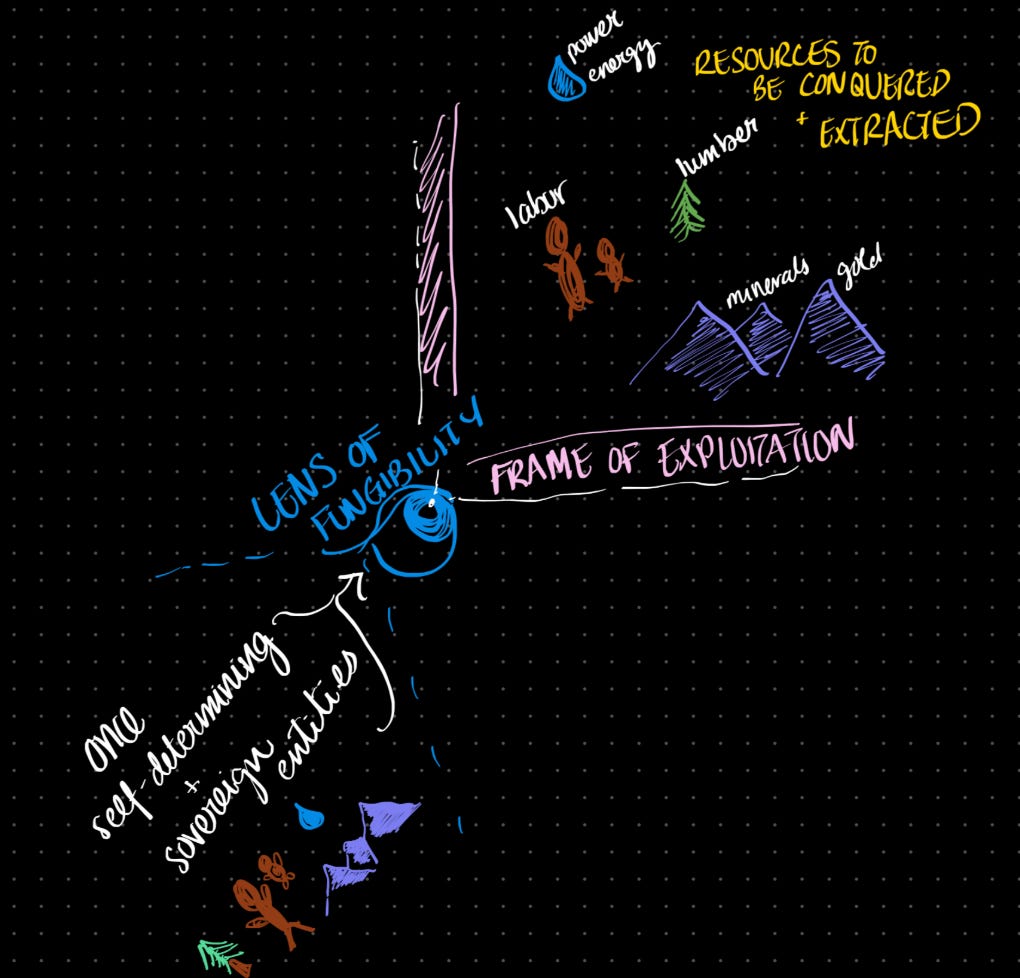
In previous works, I have discussed something called the Realm of Attainment: that which is set in front of our daily and waking mind and sold to us as desirable, actionable, achievable, possible. I argued that our Realm of Attainment contracts itself to only show us the possibilities of what capitalism has to offer us— beyond just the matter observed, the dominant worldview shapes our lenses on which we see the curated world and the frame that we peer into. Our default modern worldview peers through this default lens of fungibility. Every aspect of tangible life is seen, through this lens, as a site of opportunity (a resource) to create (via extraction) the world one wishes to see. Sovereign trees, peoples, lands and waters become defined by their purpose from the lens of the world-maker: timber. Labor. Farmland. Energy… rather than those things being sovereign unto themselves. What would it look like to live in a world where one gazes upon a tree and marvels at the life of it rather than wondering what we could make from its corpse?
Anything, at any time, can be redefined as an object for one’s own use.
Question to be revisited at the end of this essay, like the monster at the end of the book: how have I, ismatu, objectified myself to utilize myself as a good?
I wish to call your attention here to the frame of exploitation, notated above in pink (where exploit means take full advantage of). Imagine, for a moment, that the lens of fungibility allows you to paint the world as you see fit, for your personal gain. Wielding the lens of fungibility, you make a painting— but of course, that necessitates a canvas, some sort of neutral fabric stretched across a stable structure. What do you make the canvas of?
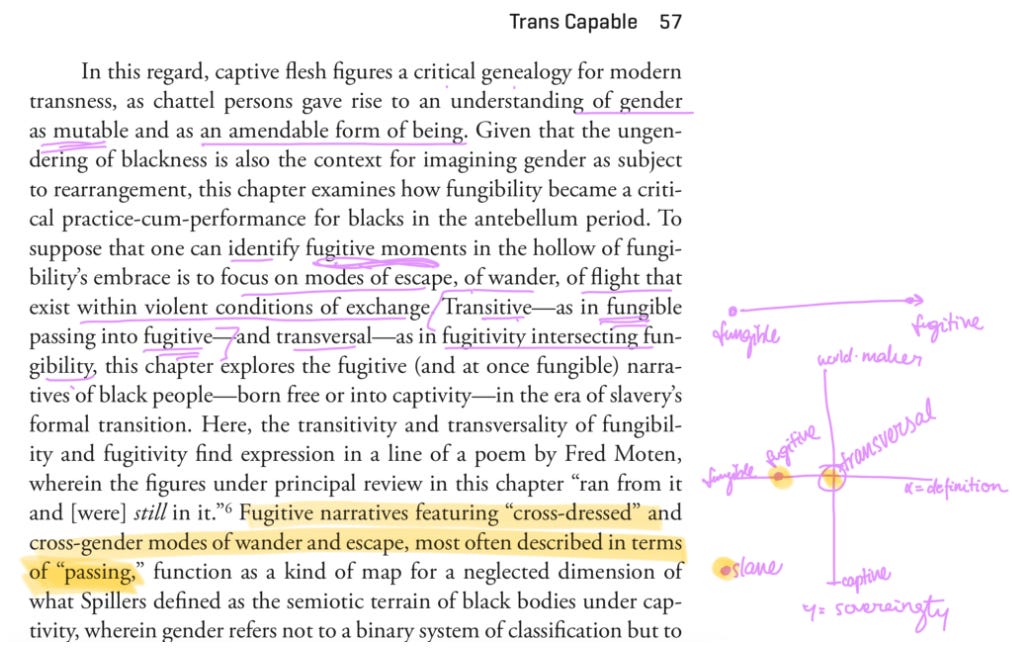
Snorton argues that captive flesh— the physical bodies of enslaved Africans— became the fore-bearer of modern gender change and deviance (here referred to as transness). Because the captive flesh endured this process of ungendering, the being inside + embodying this captive flesh, can utilize their own fungibility in this undefined, liquified state, and apply their own repairs— “gender as mutual and as an amendable form of being,” where amendable means capable of being corrected by additions. “Goods,” definitionally, can be utilized by anyone willing to and wanting, right? If one’s existence has been made into a good to be bought and sold, there follows the expectation that your existence will be utilized, regardless of your personal wishes.
If you yourself are a product, is it in your best interest to utilize yourself? Does that automatically mean you benefit? What happens if one was to take full advantage of the liquifiable nature of fungible goods— can one repair oneself into a performance that better suits the skin? What might the consequences to that performance be?
Another question to be revisited: what did I, ismatu, make my canvas from? Why do I think you, Britney Spears, might relate?
The new world world-maker ( in all their varied forms… the all-controlling patriarch… the megarich record label owner… the technofascist social media founder… etc.) purchases a brand new Frame of Exploitation, a sturdy one able to hold up over the course and wear of years. The body changes, you know! Gotta get something able to hold up. He lights a cigarette and waits for a muse for his next painting. Someone who dreams and dreams, and has the sovereignty over her life and day to continue dreaming, relaying and replaying her desires for visibility. Ah, there she is now. A girlchild with a talent for [singing. speaking. etc.]. Easy on the eyes. Bright. Vivacious. You get the picture. He tells you about the world as he sees it— and he sees it all. Every creek and crowd, every blockchain and block, chain, and lock under his domain. He tells you all you have to do is get in frame.
Smile!

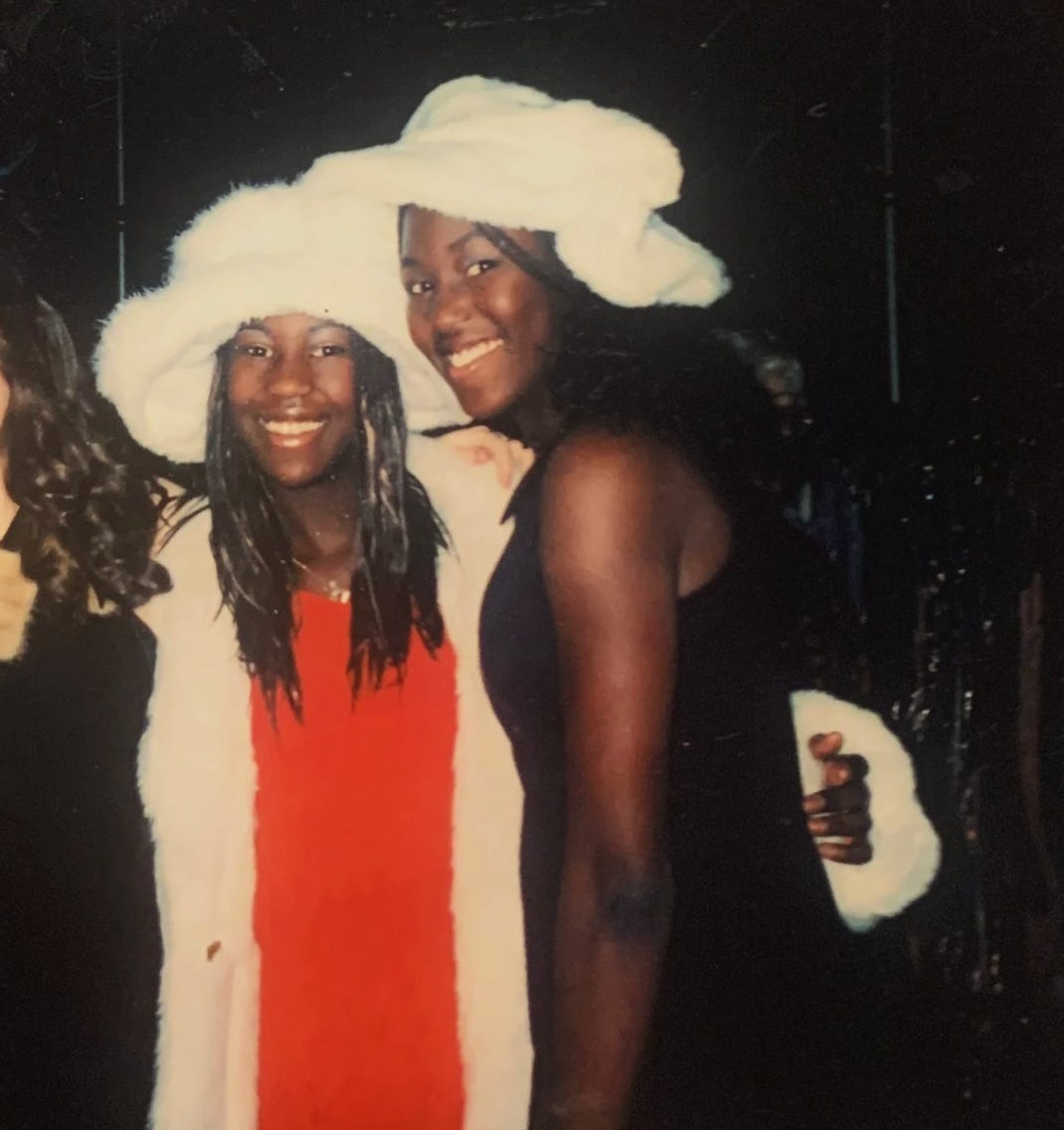
The canvas, of course, is flesh. Surely we saw that one coming.
If you are a product, utilizing yourself would only be beneficial if you gained the ability to exact your own will for yourself upon your undefinitions and, in turn, upon the world around you.
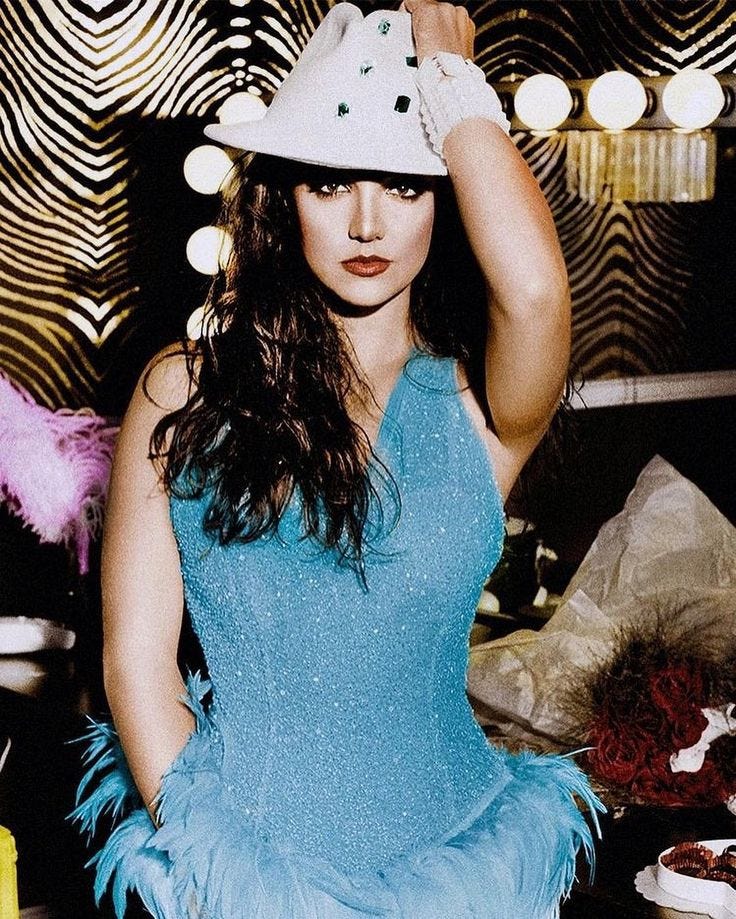
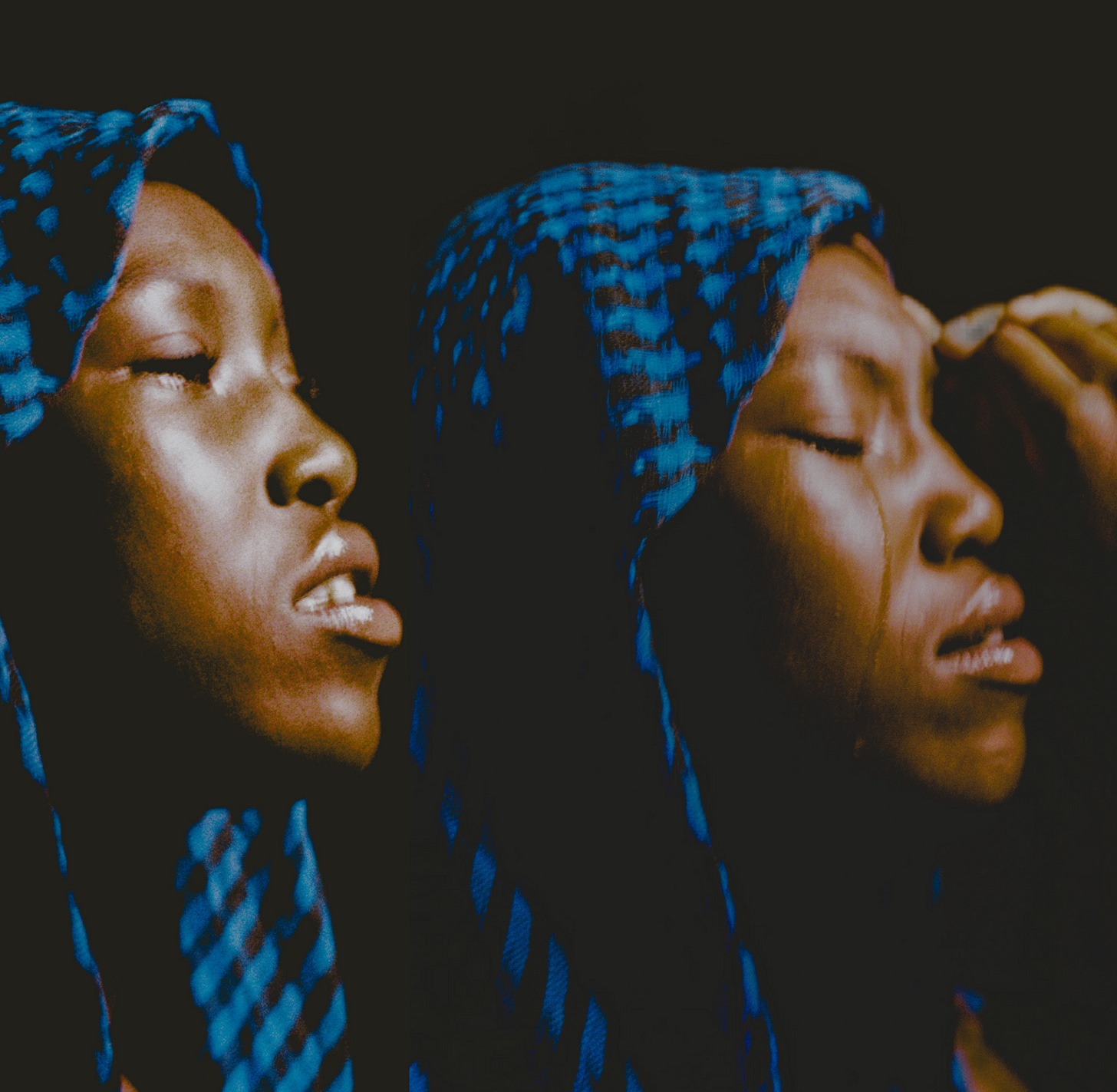
If you, in realizing that you have been forcibly reduced to a block of clay in someone else’s sculpture, the leathered skin that stretches over their own world’s framing, and you in your bravery have taken it upon yourself to shape your own self such that you might experience some freedoms, that shaping must please you and ensure you are not useful to those attempting to exploit you. Beyond the physical shape of one’s life, the metaphysical shape of the mind must change from garnering pleasure satisfying the world around you to garnering pleasure satisfying you and dissatisfying the world.
Snorton then argues the way out lies in… the magic of transversing your own domain. Fugitivity. Flight. Accessing the transmutation of becoming something or someone that values itself [intrinsic. of my own weight. because I said so]. To do so, you first have to break the rules. The mode of fugitivity, where you snatch yourself in your own body and run, creates the most vulnerability and the most possibility at once. The space is fundamentally transformative, ionic, an in-between— it’s as if you’re in between a chemical reaction, going from one substance to another. You can’t stay a fugitive forever. You either free yourself successfully or you’re dragged back to the hell you tried to escape from.
Before we further acknowledge the water we swim in (via examining our culture of spectacle), I wish to draw attention to the two words underlined here in pink: fugitive moments. Remember that the conditions of enslavement have not left, they have only changed shape— and remember too that the process of self-determination and processes of enslavement remain diametrically opposed. They cannot co-exist. To become a fugitive in captured flesh embodies more than just running away to the Northern states, to Maroon societies, or to Guinealand; plenty of fugitive “moments of escape, of wander, of flight” can be found in repairing oneself into a formation subversive to and beyond the slavemaster’s ideations and desires. What use does the slavemaster have for the transgender, transformed, transformative slave? What use is the performance of gender, the proliferation of insanity to the market of goods? How do you sell that? You don’t!
What if you fashion yourself into something not meant to be sold? Intrinsic value only?

Doesn’t that make you feel free?
I argue the freeing, fugitive nature found in transgender flight is true for the performance/embodying of in/sanity (and, in truth, transness prerequisites some measure of insanity to engage in such bodysnatching in the first place, but that is a different essay). Just as gender is a set of performances, cultures, rituals, and expressions one can opt into, change, refit, repurpose, or exude for the purpose of in/exclusion + body-snatching, in/sanity too is a performance of self (or selves), and it can be changed at any time depending on what someone wants for themselves.
Sanity, like terrorist, is entirely up to the person holding the pen.
I also argue, over my next few essays, that the lens of fungibility can be hijacked to harness the four powers of any society (economic, militaristic, political, and cultural) to view the materials we have now as ingredients— not for the world we have, but for we must create to survive the coming decades.
RE: Face as the Symbol
If you yourself are the product, is it in your best interest to utilize yourself?
I situate myself here in my primary contradiction: someone who makes videos online to garner resources and support for offline projects, and someone who hopes to make a better world from all the kinds of work I do (digital, physical, and metaphysical).
I have a morsel here, from a longer video by FD Signifier posted in 2023— coincidentally, on my one year anniversary of becoming a “TikToker.” Audio and transcript below [though the soundbite is also included in the overall essay reading]:
[00:00.0]
These other forms of entertainment [traditional media] were easily controlled by those who owned the means of production. But the internet, YouTube, gave the means of production and distribution back to the people, and we kind of had at least the power to start to subvert that dynamic.
[00:17.7]
But the algorithms change that. I’ve had the benefit of having a lot of conversations with people who run YouTube, and while I genuinely think most of them are decent people who aren’t actively trying to do harm or make the world a worse place, they are still beholden to their corporate goals of capital, and thus have ceded a lot of control to what gets seen, to what ideas get to be amplified to the algorithm.
[00:45.2]
And the algorithm reflects the status quo. It reflects the norms of the society that we live in, with some minimal room for change. It’s a scary thought because what that means is the algorithm is now the means of production, and it picks and chooses who gets its support based on these nebulous factors that it perceives can make it money, not on the best content or the best art, and definitely what content is most valuable.
[01:12.1]
To social change, and while we may feel like BreadTube was and is art that subverts and presents venues for pursuing social change, it isn’t. It’s still entertainment within the culture industry, and it’s grown to be one of the most insidiously dangerous parts of the culture industry because it has monopolized and galvanized the attention of those closest to supporting and participating in social action, and gotten them.
[01:39.9]
Us overly concentrated on stan culture, parasocial relationships, drama, and beef. We are a few steps from being the barbs. Some of y’all genuinely are, and this is only possible because in our degraded state, those of us on the left, we find ourselves in need of catharsis to remind us that we’re not alone, to build communities that reaffirm and nurture us, and remind us that we’re not crazy for thinking the world is on fire and everyone’s playing with gasoline. And that’s important. And damn, this chubby black dude with the locks and the deep voice really makes me feel connected to a feeling that I feel like I’m missing. He makes me feel safe in a way. He’s also managed to illustrate something that’s been bothering me in a way I didn’t understand until now. And now that I’ve watched this video, I genuinely feel better. And that’s why the algorithm chose me.
[02:37.7]
I do all of those things pretty naturally. I am a useful tool in the culture industry.
I let my dissatisfaction with being trapped inside a screen crack through every… business quarter or so. Without fail, I receive comments which remind me that we must use every tool available to us to raise class consciousness towards liberatory gains (or something about as grand). In truth, I never thought of social media as a viable tool for liberatory gains— at least, not until the bombardments in Gaza began later that year. Even now, I still hold intense reservations based upon the contents of the video above. He says it as well as I would have. My purpose, whatever my personal desires, was designed above me.
When I first participated short-form social media, I did so as a vanity project. I like my face and I like attention. That same face is now so strongly associated with hope for the working class that I prepare to be recognized as a symbol wherever I go, no matter where I am in the world. Even in my family system, I am defined more by my politic, my visibility, and its consequences than I am by my relations. The last people who knew me in childhood and brought that person out of me have since died or become estranged, save my grandmothers. Some days I suffocate under this face, this superimposed superhero— you know someone said that to me? While asking for a selfie in Brooklyn, NY? “You’re like… a real live superhero.” Real quote. I don’t think these things about myself until other people insist upon the way I show up in their lives.

I include the above morsel from Signifier to address the question above as nakedly as I can: if you are the product, it is not automatically helpful to use yourself. You must be working across two fronts: the plane where you utilize yourself for your best good and the plane where you utilize yourself for the cessation of the empire who turned you into a product in the first place. I write on fungibility to remind us that social media as a tool has no neutrality. Social media is a massive behavioral training and modification machine, as so named by some of its founders. If, by the end of my tenure here, all I have ever done is convince you to spend more time in your home, looking at a screen, I have failed in every measure at building something worthwhile.
So I rewrite my essays and re-release them with the lens of fungibility, on:
- culture, where i write more about the public record of britney spears + being sold in your own body
- economic, where i write about the various ways i have sold myself as a worker and reiterate the case for a general strike
- militaristic, where i write about the conditions of blackness and refugee as it relates to warmaking
- politically, where i write about the pros and cons of becoming a propaganda machine
And, lastly, hair as the object:
In the nights before I knew I was going to see the inside of some kind of jail, I cut my hair off to preserve some sense of my autonomy.
It was long, and preciousto me, and very beautiful, and for years it had been growing with me as the sole witness. I knew I was likely to have my head coverings taken away in confinement, so I cut it in advance to keep a sense of dignity. I also knew I wanted to signal something was very, very wrong before I ended up in a place where I couldn’t contact anyone. My personal phone and other electronics were insecure means of communication. The last thing you want if you suspect you are a liability is to make perfect sense.
Or maybe not. I was crazed, wasn’t I? Anyways.
In the moments I sent out distress calls via my Instagram account, via a wildly effective performance of insanity, I took off my headscarf after screaming, running into the bathroom, slamming the door behind me, and bursting into tears. My plan was to perform haunting, cryptic sort of insanity and then engage in an eerily normal skincare routine immediately after, offering up the performance of my “lost” mind for discussion in the live chat while I layered hydrating toner on for the evening, decidedly not to see the livestream comments. I didn’t have time for skincare on camera; my mom said I was scaring her, so I ended the live earlier than what I would have wished. After the cameras cut, I opened the door and her face fell.
When my mother saw me, she said something to the effect of, Oh… your hair.
It reminded me of when I grew out my natural hair in college (to my mother’s open anger, insult, pulling out, uninvited touch, admonishment...
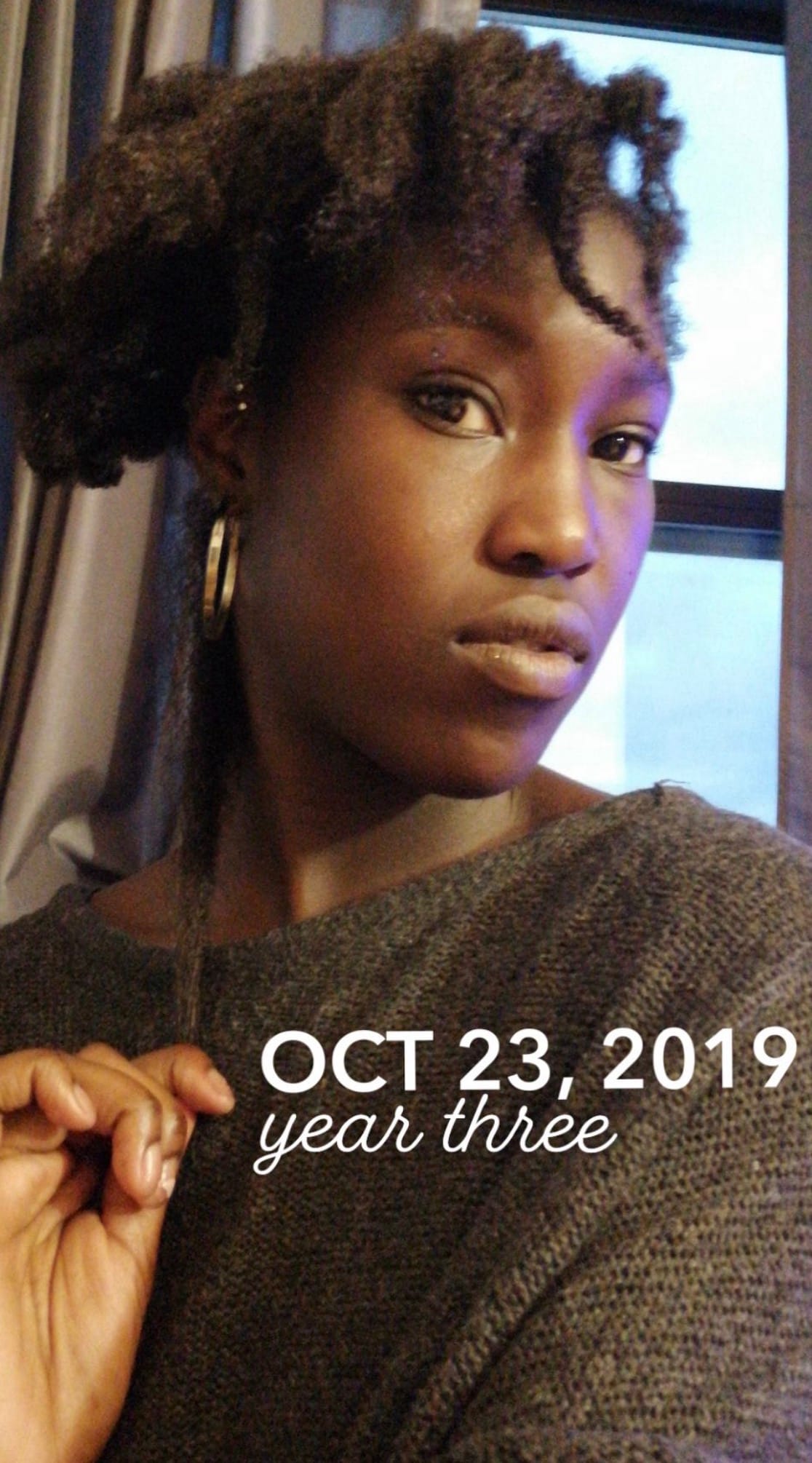
and then, as it got longer, her adoration, compliment, drawing attention to, posturing next to...
and ultimate feelings of shock and betrayal when I cut it off again).
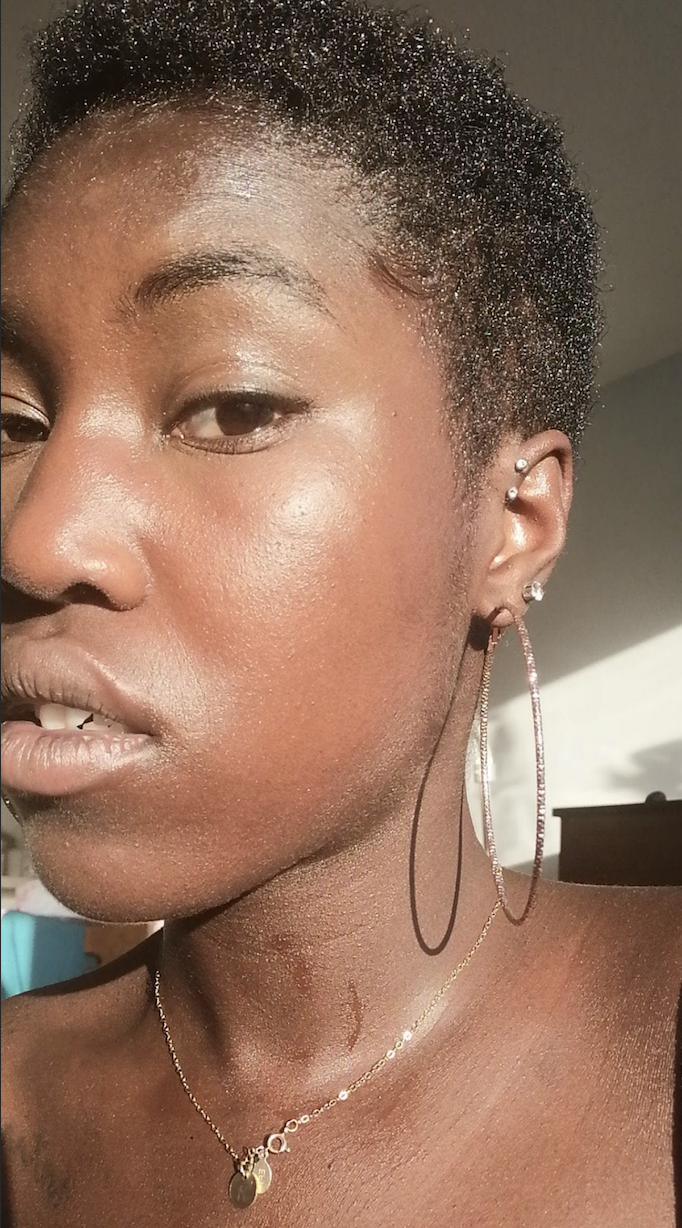
Remembering this history in moment’s timespan, I responded simply. “Yes, I did.”
“It just looks so… rough,” she said. Exact quote, with a narrowing and confused gaze. She would never name it as disgust (but I would). I said nothing in response. I was thinking back to the moment I pulled my headscarf off, nervous to see it. I’d read 491 Days: Prisoner Number 1323/69 earlier that year, knowing the time was coming where I, too, would prepare for war. How unfortunately prophetic. When I saw my hair, I can see glimmers of my joy captured on camera. I thought to myself, Omg! I look like Winnie Mandela!!
“I thought we agreed,” she continued, slowly, as if to not spook something wild, “that you would always look… half-way decent on camera.”
I raise my chin. “That was always your rule. Not mine.”
The lens of fungibility appears everywhere: of course, in the ways we prepare our bodies and minds as goods to be sold for the market economy, but too present in the way the hair of a black girlchild belongs not to them, but to their mother.
Wherein my first lens of fungibility was understanding myself as daughter.
Daughter (n.)
- extension of the Mother, not belonging to herself in life, day, night, decision, nor time or space
- placeholder for Wife
- symbols for: goodness, chastity, loyalty, loveliness, kindness, endless and happy servitude, morality
We return to our aformentioned questions, acting as an overture:
How have I, ismatu, objectified myself to utilize myself as a good?
As laborer, a citizen, a propaganda machine, I become the object when I need to posture myself as a resource worth protecting and investing in. I objectify myself in the lifelong performance of legibility to the adults around me as a prerequisite of care; in the endless preparation of my mind and my most intimate stories to get a full ride to college, training me to this day to keep my most salient thoughts in a bottle so that I might sell them later; in selling stories of my countrymen’s most vulnerable moments to academia; in selling sensuality, nudity, incredible athleticism, and intimacy as a sex worker; in the selling of my face, voice, emotions, ideals and worldviews to garner mass acceptability by way of media-making. I make myself the object of my art, entice sales via intimacy, and trade this art for access to more resources.
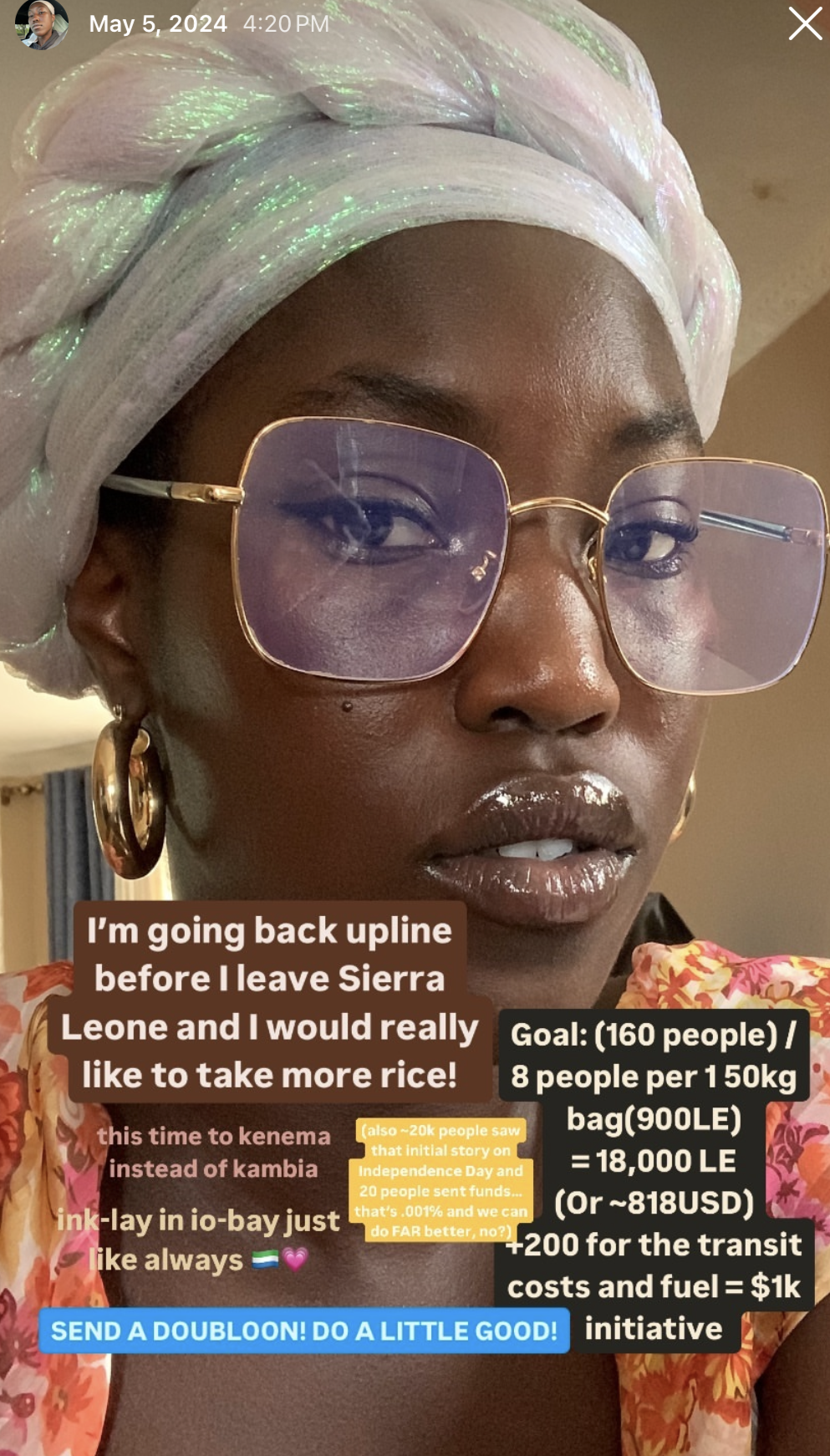
What did I, ismatu, make my canvas from?
I think my canvas was largely made for me, by the nature of the mediums of exchange available (the strip club, academia, and social media— and familia— all hinge upon the aesthetics of emotion, which I argue in the next essay). But either way, there is a canvas made of my captured flesh, my face and voice and skin and cheekbones and micro-expressions and jagged teeth, there to receive whatever people need to think and feel upon my likeness, a morsel of my mind’s eye. In my current role as public thinker/propaganda machine, I become the dinner plate by which others can have their conversations. It’s why I don’t check comments anymore— what a horrifying supper, the day one’s plate decides to speak back to them.
Why do I think Britney Spears might relate?
Because the only moments I have been mine, truly mine, in the last era of life, were the fugitive moments, just before flight, when everyone thought I was crazy.
I wonder about you, in the moments you hid with your children in the bathroom terrified of the day they’d be stripped from you… in the eye of the storm that swirled around that moment… did you feel yours? Just for a hairsbreadth? Did you feel that you belonged to yourself? Were the moments that the world called you deranged afterwards worth the moments in that bathroom where you held your sons and felt their hearts against yours?
Mrs. Spears, do you think you’ve achieved flight?
I write to you because you are one of my real-life superheroes and I can still imagine tucking you to bed. I’m still a little girl shaking my hips and singing at my mom, “I’m not that innocent!” I think you’ve already re-made this world in my favor. I still think you can do anything.
To my constituents, cc’d on this email:
If I am the Canvas, then what is the frame made of? Especially when to exploit means, at once, a heroic act or deed and a program or system designed to take advantage?
…Is it not us, the masses? Those of us that scroll and comment and spectate upon what happens in the world, accepting or rejecting floating theses into our worldviews? Our desire to witness, to participate, to be satiated, filled, seen… at minimum, entertained… do we not hold up the frame of exploitation? Do we not fuel the celebrity machine we simultaneously decry so much? To take full advantage of the resource presented to us inside the frame of our tabloid/newspapers/desktop computers phone screens? Wherever we get the news?
In truth, I write because people have begun to speak to me as if I am a fictional character, a facet of their own imaginary with a predetermined background and a conclusive ending. It’s frightening, honestly; I have a puddle of what Spears have an ocean of.
When a living person becomes remolded into a symbol whose meaning takes shape beyond them and their desires… when one has no authority to shape oneself for oneself… how human are you? What remains? What happens to the living person inside the object? What happens to you, the breathing human inside the machine, who cannot possibly feel the weight of everyone’s individual gaze and projections but live to know they exist all the time?
I miss the not knowing. I miss not thinking. I miss being able to talk about my life and have it be imaginable. Now, I am either accused of misunderstanding my largeness or being heralded as someone’s hero.
Fully teasing out our culture of spectacle is beyond the scope of this essay but the subject of essays to come. I prmoise. I’ll end here, with a prelude to the resting place of our snowballing theses: hypervisibility makes me miss drugs.
There’s a moment I described in small prophecies— the encapsulation of my political thought up until… about this point— where I am sitting on my Chicago porch talking to my dad, the day I told him I was a stripper. And he’s begging me: keep your mind sober. Keep your mind sober. And I am blowing o’s on that very phone call, telling him, yes, of course Father, of course I am Father, and at the same time, there’s a homie bumbling down 42nd street, high outta his mind, rumbling and just acting any kind of way because, in that moment, he’s fallen so low on the realm of what is Human, subHuman, unHuman (as he’s become unhoused), that he can be…
…anything he wishes.
And I watched him bubling down the road, blowing o’s, thinking about how many times I was saying by rote, yes father, yes father, of course I will daddy, yes father. Looking at that man, going, "
“…goddamn if he doesn’t look free.”
Peace.
IG